
The Benefits of Taking a Daily Multivitamin (and How to Make Them Count)
By Alli · May 12, 2023
8 min read

Evidence-based. This article was written and fact-checked by the Manna Editorial Team against the peer-reviewed research cited throughout.
Quick answer: A daily multivitamin can help fill gaps in your diet, support the biochemical pathways your body uses to convert food into energy, and provide nutrients that play structural roles in immune function and healthy aging—but it works best when absorbed well and taken consistently.
You've probably heard the debate. Multivitamins are either essential daily insurance or an expensive waste. You've seen the headlines about studies that show no benefit, and just as many claiming broad support for health. Here's what's actually going on.
The benefits of taking a multivitamin depend on three things: whether you need it (most people have at least a few nutrient gaps), what it contains, and whether your body can actually absorb it. The research is clearest on populations with inadequate intake—older adults, people with restricted diets, those with absorption issues—but even for otherwise healthy people, a well-formulated multi can support foundational processes like energy metabolism, immune response, and cellular repair. It just won't fix a poor diet, erase chronic disease risk, or give you superhuman energy if you're already well-nourished.
This guide walks through what multivitamins actually do, what the evidence supports, and how to make them count.
Filling Everyday Nutrient Gaps
The most straightforward benefit of a daily multivitamin is covering shortfalls. National surveys consistently show that many adults fall short on vitamin D, magnesium, vitamin K, and several B vitamins—even when they think they're eating well. Soil depletion, food processing, storage, and cooking all chip away at nutrient density. A multivitamin acts as a backstop.
This doesn't mean you can ignore food quality. Whole foods deliver fiber, phytonutrients, and compounds that supplements can't replicate. But when your schedule, budget, appetite, or preferences leave gaps—and they do for most people—a multi helps ensure you're hitting baseline needs for the vitamins and minerals that underpin thousands of enzymatic reactions.
The nutrient gaps vary by life stage and circumstance. Menstruating women often need more iron. Older adults absorb less B12 and make less vitamin D from sun exposure. People following plant-based diets may come up short on B12, zinc, and omega-3s. A targeted multivitamin won't replace medical evaluation, but it can reduce the likelihood that a micronutrient deficiency quietly undermines your health.[1]
Energy Metabolism: Do Multivitamins Give You Energy?
This is one of the most common—and most misunderstood—multivitamin benefits people search for. The short answer: multivitamins don't create energy, but several of the B vitamins they contain are essential for your body to extract energy from the food you eat.
Energy comes from calories—carbohydrates, fats, and proteins. B vitamins like B1 (thiamine), B2 (riboflavin), B3 (niacin), B5 (pantothenic acid), and B6 (pyridoxine) act as coenzymes in the metabolic pathways that break down those macronutrients and convert them into ATP, the molecule your cells use for fuel. Without adequate B vitamins, those pathways slow down, even if you're eating enough food.
If you're deficient—or even marginally low—in one or more B vitamins, you may feel fatigued, sluggish, or mentally foggy. Supplementation in that context can support a return to normal energy production. But if your B-vitamin status is already adequate, adding more won't turbocharge your mitochondria. There's a ceiling.[2]
So when people ask "do multivitamins give you energy," the honest answer is: they support the systems that generate energy, and they may help if you're running low, but they're not stimulants. You won't feel a jolt like you would from caffeine. The benefit is steadier baseline function, not a burst.
Immune and Everyday Wellness Support
Your immune system is resource-intensive. It requires adequate levels of vitamin C, vitamin D, zinc, selenium, and several B vitamins to function properly—producing antibodies, coordinating immune cell communication, and managing inflammatory responses. A deficiency in any of these can compromise immune resilience, especially during stress, illness, or aging.
Meta-analyses have found that micronutrient supplementation—particularly in populations with baseline insufficiencies or increased needs—supports various markers of immune function.[4] This doesn't mean a multivitamin prevents colds or infections outright; it means it helps maintain the capacity for a healthy immune response when you need it.
The same principle applies to everyday wellness. Antioxidant vitamins like C and E, along with selenium and zinc, help manage oxidative stress—the cellular wear-and-tear that accumulates from normal metabolism, environmental exposures, and inflammation. A multivitamin doesn't erase oxidative damage, but it supports the body's endogenous repair and defense systems.[5]
Think of it as maintaining the infrastructure. You still need sleep, stress management, and a decent diet. But adequate micronutrient status keeps the foundation solid.
Healthy Aging and Changing Needs
As you age, your nutrient needs shift. Stomach acid production declines, which impairs B12 absorption. Skin becomes less efficient at synthesizing vitamin D. Bone turnover accelerates, increasing the need for calcium, magnesium, and vitamin K2. Cognitive function becomes more sensitive to deficiencies in B vitamins, particularly B6, B12, and folate, which regulate homocysteine—a marker linked to cognitive decline when elevated.[6]
Multivitamin use in older adults has been associated with better maintenance of various health markers in observational studies and some controlled trials, though results vary by formulation and population.[3] The evidence is strongest when the multivitamin addresses known deficiencies or age-related absorption challenges. It's not a longevity pill, but it can help support the physiological processes that underpin healthy aging—immune function, cellular repair, and metabolic regulation.
If you're over 50, a multivitamin formulated for your life stage—with higher B12, D3, and K2, for example—makes more sense than a generic one-size-fits-all formula. And as always, it works best alongside good food, movement, and sleep, not as a replacement.
The Catch: Benefits Depend on Absorption and Consistency
Here's the part that most multivitamin marketing skips: a nutrient on a label isn't the same as a nutrient in your bloodstream. Absorption varies wildly depending on the form of the vitamin or mineral, what you take it with, your gut health, and the delivery system.
Traditional pressed-tablet multivitamins often contain cheap, poorly absorbed forms—magnesium oxide instead of glycinate, synthetic folic acid instead of methylfolate, fat-soluble vitamins with no lipid carrier. Even if the doses look good on paper, your body may absorb only a fraction. For more on why formulation matters, see our breakdown of what makes a multivitamin effective.
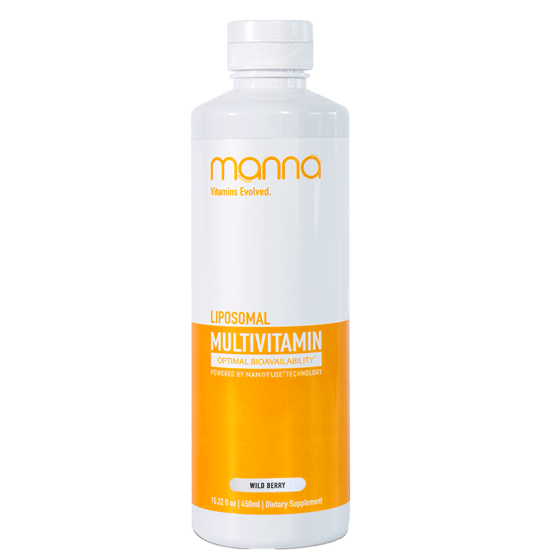
Liposomal and phospholipid-based delivery systems—like the technology Manna uses—encapsulate nutrients in lipid structures that improve absorption and cellular uptake, particularly for fat-soluble vitamins (A, D, E, K) and compounds that otherwise degrade in the gut. You can explore how that works in our guide to liposomal multivitamins.
Consistency matters too. Multivitamins aren't acute interventions; their benefits accumulate over weeks and months as they correct deficiencies and support baseline function. Taking one sporadically won't do much. Daily use, paired with a reasonably balanced diet, is what drives measurable outcomes.
How to Get the Most from a Daily Multivitamin
If you've decided a multivitamin makes sense for you—or you're already taking one—here's how to maximize the benefit:
- Take it with food, especially a source of fat. Fat-soluble vitamins (A, D, E, K) need dietary fat for absorption. A multivitamin taken on an empty stomach often leads to poor uptake and nausea.
- Choose bioavailable forms. Look for methylated B vitamins (methylfolate, methylcobalamin), chelated minerals (magnesium bisglycinate, zinc picolinate), and vitamin D3 over D2. If the label doesn't specify the forms, it's usually the cheaper, less absorbable versions.
- Pair it with a varied diet. A multivitamin is a supplement, not a substitute. Whole foods deliver cofactors, fiber, and compounds that enhance nutrient utilization.
- Be consistent. Set a daily routine—same time, same context. Morning with breakfast works well for most people.
- Match it to your needs. A 25-year-old athlete has different nutrient demands than a 65-year-old retiree. If you're unsure what you need, read our guide on whether a multivitamin is right for you.
For a formulation built around absorption and bioavailability, you can explore Manna's liposomal multivitamin—designed with the principles above in mind.
FAQ and Who Should Consult a Doctor First
Can I take a multivitamin if I'm on medication?
Some vitamins and minerals interact with medications—vitamin K with blood thinners, calcium with certain antibiotics, high-dose B6 with some neurological drugs. Always check with your healthcare provider if you're on prescription medication.
Will a multivitamin make up for a poor diet?
No. It can fill specific nutrient gaps, but it won't provide fiber, phytonutrients, healthy fats, or the synergistic compounds found in whole foods. Think of it as a backstop, not a foundation.
Are there people who shouldn't take a multivitamin?
People with hemochromatosis (iron overload), certain kidney conditions, or hypercalcemia should avoid standard multivitamins or choose formulas without iron or calcium. Pregnant women should use prenatal-specific formulations. If you have a chronic health condition or take multiple medications, consult your doctor before starting any supplement.
How long does it take to notice benefits?
If you have a deficiency, you may notice improvements in energy or well-being within a few weeks. If you're already well-nourished, the benefits are more about maintaining baseline function—harder to "feel," but measurable over time in lab work and long-term health markers.
Is more always better?
No. Fat-soluble vitamins can accumulate to toxic levels. Some minerals compete for absorption. Megadoses of certain B vitamins may cause side effects. A well-formulated multivitamin provides what you need without excess. More isn't necessarily better—appropriate dosing is.
If you're unsure whether a multivitamin is right for you, or you want to understand what you're actually getting from the one you're taking, talk to a healthcare professional. They can assess your diet, run labs if needed, and help you make an informed decision.
These statements have not been evaluated by the Food and Drug Administration. This product is not intended to diagnose, treat, cure, or prevent any disease.
Sources
- Maggini S et al. Immune Function and Micronutrient Requirements Change over the Life Course. Nutrients (2018).
- Sarris J et al. Potential mental and physical benefits of supplementation with a high-dose, B-complex multivitamin/mineral supplement: What is the evidence?. Nutricion hospitalaria (2021).
- Wang W et al. Multivitamin and mineral use: A rapid review of meta-analyses on health outcomes. Ageing research reviews (2026).
- Li D et al. Effects of micronutrient supplementation on immune function in older adults: a meta-analysis. Frontiers in immunology (2026).
- Simon MISDS et al. Antioxidant Micronutrients and Essential Fatty Acids Supplementation on Cystic Fibrosis Outcomes: A Systematic Review. Journal of the Academy of Nutrition and Dietetics (2020).
- Barnes JL et al. Consideration of nutrient levels in studies of cognitive decline. Nutrition reviews (2014).
This article is for educational purposes only and is not medical advice. These statements have not been evaluated by the Food and Drug Administration. Manna products are not intended to diagnose, treat, cure, or prevent any disease. Consult your healthcare provider before starting any new supplement, especially if you are pregnant, nursing, taking medication, or managing a medical condition.
Frequently asked questions
Wellness that actually works
Liposomal Multivitamin
10x better absorption than traditional vitamins. The daily foundation.
Explore Manna's clinically-informed liposomal supplements.
Keep reading



Feel the difference absorption makes.
Start today, backed by our 90-day money-back guarantee. Free U.S. shipping on every subscription.