
Liposomal Multivitamin: What It Is and Why Absorption Matters
By The Manna Editorial Team · August 10, 2026
11 min read
Evidence-based. This article was written and fact-checked by the Manna Editorial Team against the peer-reviewed research cited throughout.
Quick answer: A liposomal multivitamin wraps nutrients in phospholipid shells—the same material your cell membranes are made of—to protect them through digestion and help them reach your bloodstream intact.
You've probably stood in the vitamin aisle staring at labels that list dozens of nutrients in impressive-looking percentages. Maybe you've even tried a few bottles, hoping to feel the difference. If you didn't notice much, it may not have been the ingredients that failed you—it was what happened to them between the bottle and your cells.
Here's what's actually going on. The gap between what's printed on a multivitamin label and what your body can use comes down to a single, unsexy bottleneck: absorption. A liposomal multivitamin addresses that bottleneck by changing not what nutrients you take, but how they're delivered.
The Problem With Most Multivitamins: Absorption, Not Ingredient Lists
Most multivitamins are built backwards. Brands compete on ingredient count and potency—200% of this, 500% of that—but relatively few address what happens after you swallow the capsule.
Your stomach is a hostile environment by design. It churns out hydrochloric acid strong enough to break down food, kill pathogens, and denature proteins. Nutrients in a standard tablet or capsule dissolve into this acid bath and must survive it, navigate the gastrointestinal tract, cross the intestinal wall, and finally enter the bloodstream—all while enzymes, bile salts, and gut flora interact with them.
Some nutrients handle this journey well. Others degrade, bind to compounds that block absorption, or pass through without ever crossing the gut barrier. Water-soluble vitamins like vitamin C and B-complex can be fragile in acidic conditions. Fat-soluble vitamins—A, D, E, K—need dietary fat present to absorb properly, which is unpredictable with a pill taken on an empty stomach. Minerals like magnesium, zinc, and iron often compete with each other for the same absorption pathways, reducing uptake of all three.
The result: what the label promises and what your bloodstream receives are two different things. Liposomal delivery was developed to narrow that gap.
What a Liposome Actually Is
If you've heard the term "liposomal vitamin" but the explanation felt vague or overhyped, here's the plain version.
A liposome is a microscopic sphere made from phospholipids—molecules with a water-loving head and a fat-loving tail. These are the same building blocks that form your cell membranes. When phospholipids are mixed in water under the right conditions, they naturally self-assemble into double-layered shells with a hollow center. That center can hold water-soluble nutrients; the fatty layers can carry fat-soluble ones.
The structure looks like a tiny bubble. The nutrient sits inside or within the membrane, surrounded by a protective phospholipid barrier. Think of it as a molecular suitcase designed to carry fragile cargo through rough terrain.
In supplement formulations, the phospholipids typically come from sunflower or soy lecithin, often combined with medium-chain triglycerides (MCT oil) to stabilize the structure. The size of the liposome matters—smaller particles, in the nanometer range, have been shown to improve interaction with intestinal cells[3].
That's what a liposomal vitamin is: the nutrient you want, housed in a phospholipid shell that mimics the body's own cellular architecture.
How Liposomal Delivery Protects Nutrients Through Digestion
The phospholipid shell does two things that matter for absorption.
First, it shields the nutrient from the harsh environment of the stomach and upper GI tract. Stomach acid, digestive enzymes, and bile salts interact primarily with the outer lipid layer, leaving the nutrient inside relatively undisturbed. This is especially important for nutrients that degrade in acidic pH or bind to food particles.
Second—and this is the key mechanism—the liposome's structure allows it to merge with the lipid bilayer of intestinal cells. Because cell membranes and liposomes are made of similar materials, the liposome can fuse with the cell surface and release its contents directly into or near the cell, bypassing some of the typical absorption barriers. Research has shown that liposomal encapsulation can improve bioavailability of certain nutrients by protecting them during transit and facilitating cellular uptake[1].
This doesn't mean 100% of the nutrient gets absorbed—no delivery system achieves that. It means more of what you ingest has a viable pathway to your bloodstream. Studies on liposomal formulations have demonstrated enhanced delivery across biological membranes, with particular relevance for nutrients that otherwise show poor uptake[2].
It's a targeted upgrade to the last mile of nutrient delivery.
Liquid vs Pills: Why Format Matters for a Daily Multi
Liposomal multivitamins are almost always liquid. That's not a coincidence—it's a requirement of the chemistry.
Liposomes are suspensions. The phospholipid shells form in a liquid medium and stay intact as long as they remain in that medium. Drying them into a tablet or powder risks collapsing the structure, which defeats the purpose. A stable liposomal formula needs to stay liquid.
This has practical advantages beyond delivery. Liquids don't require the binders, fillers, or coatings that tablets and capsules need to hold their shape. You won't find magnesium stearate, microcrystalline cellulose, or artificial dyes in a well-designed liquid multivitamin. What you see on the ingredient list is what delivers the nutrients and preserves the formula.
Liquids also bypass the disintegration step. A tablet has to break apart in your stomach before nutrients are even available for absorption—a process that can take 30 minutes or more and may not complete fully if the binder is stubborn or your digestion is sluggish. A liquid is immediately bioavailable the moment it hits your GI tract.
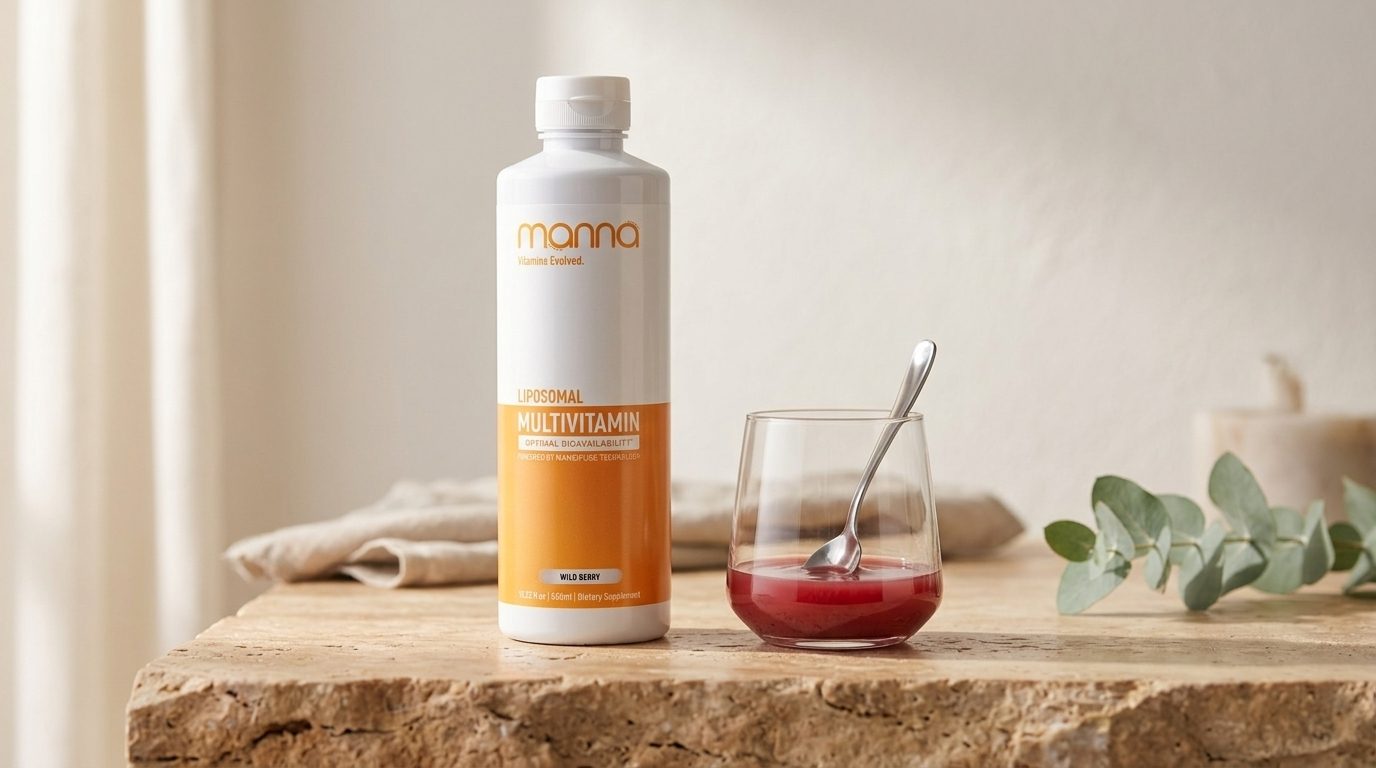
The trade-off: taste and texture. A liquid multivitamin containing fat-soluble vitamins, B-complex, and minerals will not taste like juice. Manna's liposomal multivitamin is formulated to be drinkable straight or mixed into water or a smoothie, but expectations should be realistic—it's a functional product, not a flavored beverage.
What to Look for Beyond 'Liposomal'
Liposomal delivery is valuable, but only if the nutrients inside the liposomes are the right forms to begin with. Not all vitamins and minerals are created equal. Bioavailability starts with molecular structure.
Folate, not folic acid. Folate is the natural, bioactive form your cells actually use. Folic acid is the synthetic version—it requires conversion by an enzyme (MTHFR) that many people carry variants of, making the conversion inefficient. Methylfolate (5-MTHF) is the form that bypasses that step entirely. If a multivitamin uses folic acid, liposomal or not, you're still relying on your genetics to make it useful.
Methylcobalamin for B12. Cyanocobalamin is cheap and stable, but your body has to convert it into methylcobalamin or adenosylcobalamin to use it. Methylcobalamin is already active and ready to support methylation, nerve health, and red blood cell production.
Chelated minerals. Minerals like magnesium, zinc, and iron absorb poorly in their elemental forms. Chelation—binding the mineral to an amino acid like glycinate—improves uptake and reduces GI side effects. Magnesium glycinate is gentler and more absorbable than magnesium oxide. Zinc glycinate beats zinc sulfate on the same measures.
Vitamin K2 as MK-7. If a multi includes vitamin K, make sure it's K2 in the MK-7 form. Unlike K1 (phylloquinone), which mostly supports clotting, MK-7 activates proteins that direct calcium into bones and teeth and away from soft tissues. MK-7 also has a longer half-life in the body than shorter-chain K2 forms.
Fat-soluble vitamins in a fat-based matrix. Vitamins A, D, E, and K need fat to absorb. A liposomal liquid built on an MCT oil or phospholipid base provides that inherently. A pill requires you to take it with food containing fat, which introduces variability.
These choices—active forms, chelated minerals, appropriate vitamin variants—compound with liposomal delivery. You're not just protecting the nutrients; you're starting with versions the body can actually use. For more on evaluating multivitamin formulas, see our guide on choosing a multivitamin.
Honest Limits: What Liposomal Delivery Does NOT Do
It's easy to find marketing that makes liposomal sound like magic. Here's what the evidence does not support.
It does not multiply potency. Liposomal delivery improves the percentage of a nutrient that reaches your bloodstream, but it does not change the amount you ingested. If you take 100 mg of vitamin C in a liposomal form, you're still taking 100 mg. More of it may be absorbed compared to a standard tablet, but it's not equivalent to taking 500 mg.
It does not work equally well for all nutrients. Liposomal encapsulation has shown the most benefit for nutrients that are either poorly absorbed, unstable in the GI tract, or both—vitamin C, curcumin, glutathione, CoQ10, and some fat-soluble vitamins. For nutrients that absorb well on their own (like most B vitamins in active forms), the improvement may be modest. The benefit is real but context-dependent.
It is not a replacement for a varied diet. A multivitamin—liposomal or otherwise—fills gaps. It does not replicate the fiber, polyphenols, enzymes, and hundreds of micronutrients found in whole foods. Nor does it compensate for poor sleep, chronic stress, or a sedentary lifestyle. Absorption improvements matter, but they operate within the larger context of your overall health inputs.
It is not regulated as a drug. Liposomal supplements are dietary supplements, not pharmaceuticals. They are not evaluated by the FDA for safety or efficacy before they reach the market. Quality varies widely by manufacturer. Third-party testing, transparent sourcing, and published certificates of analysis (COAs) are your best proxies for quality.
Liposomal delivery is a meaningful refinement to nutrient bioavailability, supported by research, but it's not a cure-all and shouldn't be sold as one.
How Manna Approaches It
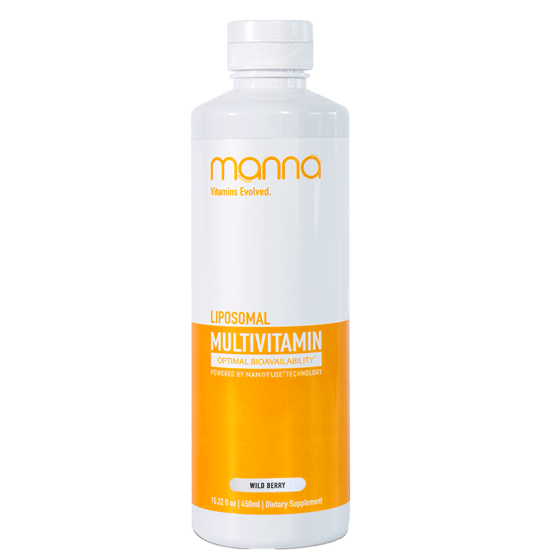
Manna's liposomal multivitamin is designed around a few principles: active nutrient forms, stable liposomal encapsulation, and formulation transparency.
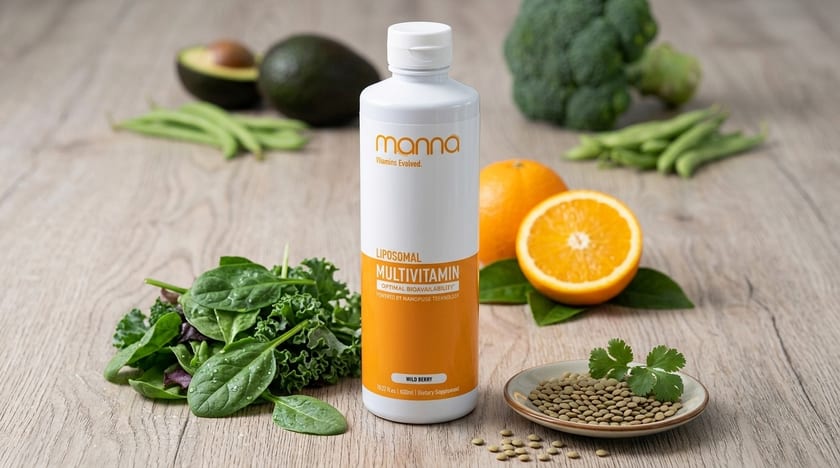
We use methylfolate, methylcobalamin, chelated minerals (magnesium glycinate, zinc glycinate), vitamin K2 as MK-7, and mixed tocopherols for vitamin E. Fat-soluble vitamins are suspended in a phospholipid and MCT base, forming liposomes that protect them from degradation and support absorption.
The formula contains no synthetic fillers, binders, or artificial preservatives. The ingredient list is the active nutrients, the phospholipid carrier, natural flavoring, and a preservative system that keeps the liquid stable without refrigeration.
We publish third-party lab results (COAs) for each batch, testing for purity, potency, and contaminants—heavy metals, microbes, and solvents. These are available on request and posted on the product page.
This is a first-party explanation—we're the manufacturer, not an independent reviewer. Our goal is to give you enough detail to make an informed choice and to be candid about what liposomal delivery does and doesn't accomplish. If you want to understand more about the science behind our delivery system, visit our liposomal delivery overview.
FAQ + Who Should Ask a Doctor First
How do I take a liposomal multivitamin?
Most liquid liposomal multis come with a measuring cup or can be taken directly from a pre-measured packet. You can take it straight, mix it into water, or add it to a smoothie. Because the nutrients are in a fat-based suspension, you don't need to take it with food, though some people prefer to.
Can I take it on an empty stomach?
Yes. The phospholipid matrix provides the fat needed for fat-soluble vitamin absorption, so you don't have to time it with meals. That said, some people tolerate any multivitamin better with food. Listen to your body.
Does it need to be refrigerated?
Not if it's formulated with a stable preservative system. Manna's liposomal multivitamin is shelf-stable. Check the label of any product you buy—some liquid vitamins do require refrigeration after opening.
Is liposomal the same as "micellized" or "emulsified"?
No. Those are different delivery technologies. Micelles are single-layer structures; emulsions are fat droplets dispersed in water. Liposomes are bilayer phospholipid vesicles. All three aim to improve bioavailability, but the mechanisms differ. For a breakdown of liquid formats, see our comparison of liquid vitamins vs pills.
Who should consult a healthcare provider before taking a multivitamin?
- Anyone pregnant, breastfeeding, or planning to become pregnant
- People taking prescription medications (especially blood thinners, as vitamin K can interact)
- Individuals with kidney disease, liver disease, or hemochromatosis (excess iron storage)
- Those with a history of kidney stones
- Anyone scheduled for surgery within two weeks
- People with known nutrient metabolism disorders
A multivitamin is generally safe for most healthy adults, but individual health conditions and medications can create interactions or contraindications. When in doubt, ask.
Comparison: Liposomal Liquid Multivitamin vs Standard Tablet Multivitamin
| Feature | Liposomal Liquid Multivitamin | Standard Tablet Multivitamin |
|---|---|---|
| Absorption protection through digestion | Phospholipid shell shields nutrients from stomach acid and enzymes; facilitates cellular uptake | Nutrients exposed directly to GI tract; absorption depends on individual digestion and nutrient form |
| Format/ease | Liquid (taken straight or mixed); no disintegration step required; some may find taste/texture challenging | Tablet or capsule (easy to swallow for most); must disintegrate before absorption begins; portable |
| Nutrient forms | Often formulated with active, bioavailable forms (methylfolate, methylcobalamin, chelated minerals) to match delivery system | Varies widely; many use synthetic or less absorbable forms (folic acid, cyanocobalamin, oxide minerals) to reduce cost |
| Fillers/binders | Minimal or none; liquid format doesn't require structural binders | Typically contains binders, fillers, coatings, anti-caking agents, and sometimes colorants to form and preserve the tablet |
| Best for | People prioritizing absorption and bioavailability; those who want to avoid fillers; individuals willing to manage liquid format | Those seeking maximum convenience and portability; people comfortable with standard absorption rates and tablet excipients |
Both formats can be effective. The choice depends on your priorities—bioavailability and formulation quality versus convenience and familiarity. Neither is inherently better for everyone; the best multivitamin is the one you'll actually take consistently and that meets your nutritional needs.
If you're filling real gaps—confirmed by a healthcare provider or evident in your diet—and you want those nutrients to have the best chance of reaching your cells, liposomal delivery is worth considering. If you're looking for an insurance policy to complement an already solid diet, a well-formulated standard multi may be perfectly adequate.
The goal is the same either way: to support your body's daily functions with nutrients it can recognize and use. Liposomal multivitamins just change the route those nutrients take to get there.
These statements have not been evaluated by the Food and Drug Administration. This product is not intended to diagnose, treat, cure, or prevent any disease.
Sources
- Mercola J Targeted nanoliposomal nutrient delivery for human health. World journal of gastrointestinal pharmacology and therapeutics (2025).
- Herdiana Y Nano-Enhanced Diets: Advancing Metabolic Dysfunction-Related Steatotic Liver Disease (MASLD) - A Review. Diabetes, metabolic syndrome and obesity : targets and therapy (2025).
- Gorantla S et al. Recent advances in nanocarriers for nutrient delivery. Drug delivery and translational research (2022).
This article is for educational purposes only and is not medical advice. These statements have not been evaluated by the Food and Drug Administration. Manna products are not intended to diagnose, treat, cure, or prevent any disease. Consult your healthcare provider before starting any new supplement, especially if you are pregnant, nursing, taking medication, or managing a medical condition.
Frequently asked questions
Wellness that actually works
Liposomal Multivitamin
10x better absorption than traditional vitamins. The daily foundation.
Explore Manna's clinically-informed liposomal supplements.
Keep reading


Feel the difference absorption makes.
Start today, backed by our 90-day money-back guarantee. Free U.S. shipping on every subscription.