
What Is a Methylated Multivitamin? (And Who Needs One)
By The Manna Editorial Team · August 10, 2026
7 min read

Evidence-based. This article was written and fact-checked by the Manna Editorial Team against the peer-reviewed research cited throughout.
Quick answer: A methylated multivitamin contains B vitamins — specifically folate and B12 — in their already-active forms, so your body can use them directly without needing to convert them first.
You've probably seen the word "methylated" on supplement labels, heard it mentioned by a functional-medicine doctor, or stumbled across it in a podcast about gene testing and nutrition. It sounds technical — and it is — but the concept is straightforward. Here's what's actually going on.
What "Methylation" Means in Plain English
In biochemistry, methylation refers to the process of attaching a small molecule — a methyl group, composed of one carbon and three hydrogen atoms — to another compound. Your body performs thousands of methylation reactions every day to regulate gene expression, produce neurotransmitters, process toxins, and synthesize DNA.
When we talk about a methylated multivitamin, we're describing a product in which certain B vitamins — primarily folate (vitamin B9) and cobalamin (vitamin B12) — are supplied in their already-methylated, active forms. This means they're ready for your cells to use immediately, without requiring your body to convert them first.
Standard multivitamins typically include inactive forms of these vitamins: folic acid (the synthetic, unmethylated form of folate) and cyanocobalamin (a stable but inactive form of B12). For most people, the body converts these inactive forms to their active counterparts — L-methylfolate and methylcobalamin — without issue. But not everyone does this efficiently.
Methylfolate vs Folic Acid; Methylcobalamin vs Cyanocobalamin
The difference between active and inactive B vitamins is more than semantic. Let's look at the two most commonly methylated vitamins in supplements.
| Nutrient | Synthetic / Inactive Form | Methylated / Active Form |
|---|---|---|
| Folate (Vitamin B9) | Folic acid | L-methylfolate (also called 5-MTHF or L-5-methyltetrahydrofolate) |
| Vitamin B12 | Cyanocobalamin | Methylcobalamin |
Folic acid is a synthetic compound created in the 1940s. It doesn't occur naturally in food. Once consumed, it must be converted — through a multi-step enzymatic process — into L-methylfolate, the form your cells actually use.[1] That conversion relies heavily on an enzyme called methylenetetrahydrofolate reductase, or MTHFR.
L-methylfolate, on the other hand, is the active, reduced form of folate found in foods like leafy greens and legumes. It bypasses the need for enzymatic conversion and enters your folate-dependent metabolic pathways directly.[1]
Similarly, cyanocobalamin — the form of B12 in most mass-market supplements — must be converted by the liver into methylcobalamin or adenosylcobalamin to become biologically active. Methylcobalamin is already in one of those active forms and can participate immediately in methylation reactions and neurological function.
MTHFR Variants: Who Might Benefit Most from Methylated Vitamins
The MTHFR enzyme is encoded by the MTHFR gene, and variations — or polymorphisms — in that gene are extremely common. The two most-studied variants are C677T and A1298C. Depending on the population studied, somewhere between 30% and 60% of people carry at least one copy of a variant.
People who inherit two copies of the C677T variant (homozygous) may have significantly reduced MTHFR enzyme activity — in some cases, activity drops to 30% of normal. That means their ability to convert folic acid into L-methylfolate is impaired. For these individuals, consuming folic acid may result in unmetabolized folic acid circulating in the bloodstream, while their cells remain functionally low in usable folate.
Supplementing with L-methylfolate sidesteps this bottleneck entirely. Because it's already in the active form, it doesn't depend on the MTHFR enzyme. The same logic applies to methylcobalamin and B12 metabolism.
MTHFR testing has become widely available through commercial labs and at-home genetic kits, though its clinical utility remains debated. If you know you carry an MTHFR variant — especially homozygous C677T — a methylated multivitamin provides a form of folate your body can use directly, without relying on an enzyme that isn't functioning optimally.
Honest Caveat: Most People Convert Folic Acid Just Fine
It's important to state plainly what the evidence does not support: the idea that everyone needs methylated vitamins, or that folic acid is harmful for the general population.
Folic acid fortification of grain products, introduced in the United States and Canada in the late 1990s, dramatically reduced the incidence of neural tube defects — serious birth defects of the brain and spine.[2] Public health guidelines in North America continue to recommend folic acid supplementation for people of childbearing potential to support healthy pregnancies.[3][4]
For individuals without MTHFR variants or other conditions that impair folate metabolism, folic acid is converted efficiently. The body recognizes it, processes it, and uses it. There's no established harm in that pathway for most people.
That said, the availability of methylated forms allows supplement manufacturers to offer a version that works universally — for people who convert folic acid well and for those who don't. L-methylfolate doesn't require conversion, so it's effective regardless of your MTHFR status. In that sense, it's a more inclusive formulation choice, not a corrective one.
How to Tell If a Multivitamin Is Methylated
Reading the label is straightforward once you know what to look for. On the Supplement Facts panel, scan the list of ingredients under the B-vitamin section.
If the multivitamin is methylated, you'll see:
- Folate listed as: L-methylfolate, L-5-MTHF, 5-methyltetrahydrofolate, or sometimes a specific salt form like calcium L-methylfolate or Quatrefolic (a branded glucosamine salt of L-methylfolate).
- Vitamin B12 listed as: Methylcobalamin (and sometimes adenosylcobalamin, another active form).
If you see "folic acid" or "cyanocobalamin," the product is not methylated.
Some brands will call out "methylated" or "activated" B vitamins prominently on the front label. That's marketing language, but it usually signals that the formula includes the active forms. Verify it by checking the ingredients list.
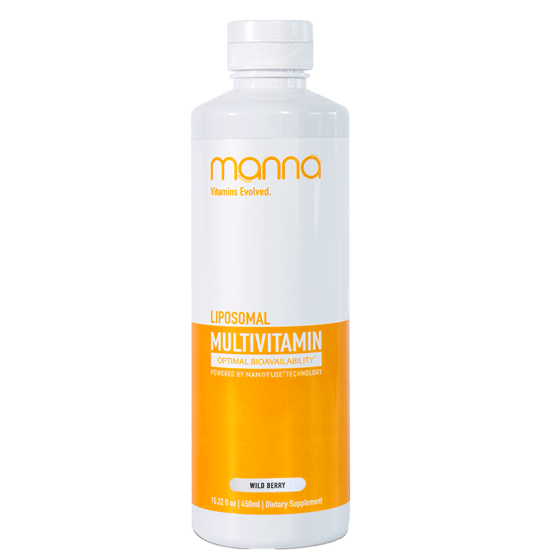
Manna's liposomal multivitamin uses L-methylfolate and methylcobalamin. We also use liposomal delivery to support absorption — a separate design choice from methylation, but one that works in concert with it. You can read more about how liposomal multivitamins work and what to look for when choosing a multivitamin in our other guides.
Is a Methylated Multivitamin Better?
Whether a methylated multivitamin is "better" depends on your individual biochemistry and health context.
If you have a confirmed MTHFR variant, a history of persistently low folate or B12 levels despite supplementation, certain neurological or cardiovascular concerns, or you're working with a practitioner who has recommended methylated forms, then yes — a methylated multivitamin is likely a more appropriate choice for you.[5]
If you don't have any of those factors and you convert folic acid efficiently, a standard multivitamin will meet your nutritional needs just fine. The active forms won't hurt you — they simply bypass a conversion step that your body already handles well.
From a formulation standpoint, methylated forms are more universal. They work for everyone, regardless of genetic variation. That's why many premium multivitamins — including multivitamins for women designed to support reproductive health — now default to methylated B vitamins.
Frequently Asked Questions
Can I take a methylated multivitamin if I don't have an MTHFR variant?
Yes. Methylated forms are safe and effective for people with normal MTHFR function. Your body will use the active folate and B12 just as it would use the forms it would have converted from folic acid and cyanocobalamin.
Do I need genetic testing before switching to a methylated multivitamin?
No. While MTHFR testing can provide useful information, it's not required. Many people choose methylated forms simply because they work for a broader range of genetic backgrounds. If you're curious about your MTHFR status, discuss testing with your healthcare provider.
Are there side effects from methylated vitamins?
Methylated vitamins are generally well-tolerated. Some individuals report feeling more energized or experiencing mild headaches when first starting methylcobalamin or L-methylfolate, particularly at high doses. If you notice any unusual symptoms, consult your doctor.
What about other B vitamins — are they methylated too?
The term "methylated multivitamin" typically refers to folate and B12, as these are the B vitamins most commonly affected by genetic variants in methylation pathways. Other B vitamins like B6, riboflavin, and thiamine may also be included in active forms (e.g., pyridoxal-5-phosphate for B6), but the focus is usually on folate and B12.
Should I talk to my doctor before switching?
Yes. If you're managing a health condition, taking prescription medications, pregnant or planning to become pregnant, or have had unusual lab results related to folate or B12, consult a healthcare professional before making changes to your supplement routine. They can help you determine whether a methylated multivitamin is appropriate for your situation.
These statements have not been evaluated by the Food and Drug Administration. This product is not intended to diagnose, treat, cure, or prevent any disease.
Sources
- Scaglione F et al. Folate, folic acid and 5-methyltetrahydrofolate are not the same thing. Xenobiotica; the fate of foreign compounds in biological systems (2014).
- Samaniego-Vaesken ML et al. Supplementation with Folic Acid or 5-Methyltetrahydrofolate and Prevention of Neural Tube Defects: An Evidence-Based Narrative Review. Nutrients (2024).
- Wilson RD et al. Guideline No. 427: Folic Acid and Multivitamin Supplementation for Prevention of Folic Acid-Sensitive Congenital Anomalies. Journal of obstetrics and gynaecology Canada : JOGC = Journal d'obstetrique et gynecologie du Canada : JOGC (2022).
- Maugeri A et al. The Role of Diet in Women of Childbearing Age: Current Evidence Supporting Nutritional Recommendations. Nutrients (2025).
- Ayoub G Vitamins, Vascular Health and Disease. Nutrients (2025).
- Chen J et al. TAS-102 an Emerging Oral Fluoropyrimidine. Anticancer research (2016).
This article is for educational purposes only and is not medical advice. These statements have not been evaluated by the Food and Drug Administration. Manna products are not intended to diagnose, treat, cure, or prevent any disease. Consult your healthcare provider before starting any new supplement, especially if you are pregnant, nursing, taking medication, or managing a medical condition.
Frequently asked questions
Wellness that actually works
Liposomal Multivitamin
10x better absorption than traditional vitamins. The daily foundation.
Explore Manna's clinically-informed liposomal supplements.
Keep reading




Feel the difference absorption makes.
Start today, backed by our 90-day money-back guarantee. Free U.S. shipping on every subscription.