
Choosing a Multivitamin for Women: What the Evidence Supports
By The Manna Editorial Team · August 10, 2026
12 min read

Evidence-based. This article was written and fact-checked by the Manna Editorial Team against the peer-reviewed research cited throughout.
Quick answer: A good multivitamin for women should contain methylfolate (not folic acid), adequate iron if you're menstruating, vitamin D₃, B₁₂ in an active form, and magnesium—in forms your body can actually absorb. What matters isn't the brand or the marketing, but whether the nutrients match your life stage and whether the formulation supports bioavailability.
You've probably noticed that searching for the best multivitamin for women returns dozens of ranked lists, each naming different brands as "top picks." What those lists rarely explain is what you should actually look for on a label, or why certain nutrients and forms matter more than others depending on where you are in life.
Here's what's actually going on: Women's nutritional needs shift across decades, and a multivitamin worth taking should reflect that. The evidence supports looking for specific nutrients—iron during reproductive years, methylfolate for anyone who could become pregnant, vitamin D and B₁₂ across all ages, and bone-supporting minerals in midlife and beyond—in forms that your body can use. This guide walks through those criteria, so you can evaluate any multivitamin against what the research shows matters.
Nutrients That Matter More for Many Women
Not every nutrient requires the same level of attention. Some—vitamin C, for instance—are abundant in a typical diet and deficiency is uncommon. Others show up consistently in surveys of inadequate intake among women, and those are the ones a multivitamin should address.
Iron
Menstruating women lose iron monthly, and many don't get enough from diet alone. Iron supports oxygen transport and energy metabolism; inadequate intake can lead to fatigue and difficulty concentrating. If you're menstruating, a women's multivitamin with 8–18 mg of iron makes sense. If you're postmenopausal or have been told by a healthcare provider that your iron levels are sufficient, you may want a formulation without added iron or with a lower dose.
Folate (as Methylfolate)
Folate supports DNA synthesis and cell division. For women who could become pregnant, adequate folate is essential for healthy fetal development, particularly neural tube formation.[3] Guidelines recommend supplementation beginning before conception. The form matters: methylfolate (5-methyltetrahydrofolate) is the active form your body uses directly, while folic acid—the synthetic form in many supplements—requires conversion, and a significant portion of the population carries genetic variants that make that conversion less efficient. More on this below.
Vitamin D
Vitamin D supports calcium absorption, bone health, and immune function. Many women have inadequate serum levels, especially those living in northern latitudes or with limited sun exposure. A multivitamin should provide vitamin D₃ (cholecalciferol), the form that raises blood levels more effectively than D₂. Amounts typically range from 1,000–2,000 IU, though individual needs vary; a healthcare provider can measure your serum 25(OH)D and adjust accordingly.
Vitamin B₁₂
B₁₂ is required for red blood cell formation, neurological function, and DNA synthesis. Absorption declines with age, and those following plant-based diets may not get enough from food. Look for methylcobalamin or adenosylcobalamin—active forms—rather than cyanocobalamin, which requires conversion.
Magnesium
Magnesium is involved in over 300 enzymatic reactions, including those that support muscle function, bone health, and glucose metabolism. Surveys suggest that many women consume less than the recommended amount. Multivitamins typically can't provide the full daily target (320 mg) because of space constraints, but a quality formulation should include a well-absorbed form such as magnesium glycinate or citrate rather than oxide, which has lower bioavailability.
Calcium and Vitamin K₂
Bone density declines after menopause, increasing fracture risk. Calcium is the primary structural component of bone, but it works best alongside vitamin D (for absorption) and vitamin K₂ (which directs calcium into bone rather than soft tissue). A multivitamin won't replace dedicated calcium supplementation if intake from diet is low, but it should include both K₂ and D₃ to support calcium metabolism. Some women may need a separate calcium supplement; discuss your total intake—from food and supplements—with a healthcare provider to avoid excessive amounts.
Life Stages: What to Prioritize in Your 20s, 30s, 40s, 50s, and Beyond
Nutritional priorities shift as your body changes. What you need in your twenties is not the same as what supports health in your sixties. Here's how to think about those transitions.
| Life stage | Nutrients to prioritize | What to check on the label |
|---|---|---|
| 20s–30s | Iron, methylfolate, vitamin D, B₁₂ | If menstruating: 8–18 mg iron. Methylfolate, not folic acid (especially if planning pregnancy). D₃ 1,000+ IU. Methylcobalamin or adenosylcobalamin. |
| 40s–50s | Vitamin D, B₁₂, magnesium, calcium, K₂ | If perimenopausal or postmenopausal: consider formulas without iron or with reduced amounts. Confirm vitamin K₂ (MK-7 form), not just K₁. Magnesium glycinate or citrate. |
| 60+ | B₁₂, D, calcium, K₂, magnesium | Higher B₁₂ doses (active forms) due to reduced absorption. D₃ 1,000–2,000 IU. Avoid formulas with high iron unless directed by a provider. Look for bioavailable mineral forms. |
20s–30s
During reproductive years, iron and folate are front and center. If you're menstruating, you're losing iron every cycle, and diet alone may not keep pace. If there's any possibility of pregnancy, methylfolate is essential—neural tube closure happens in the first weeks, often before you know you're pregnant.[3] Vitamin D and B₁₂ support energy and immune function across all ages, but establishing good levels now sets a foundation for later decades. Learn more about why methylation matters.
40s–50s
Perimenopause and menopause bring hormonal shifts that affect bone density, iron needs, and metabolism. As menstruation becomes irregular and then stops, iron needs typically decline; many women in this stage do better with a multivitamin that contains less iron or none at all. Bone health becomes a priority: vitamin D, calcium, magnesium, and especially vitamin K₂ (menaquinone-7) work together to support bone mineral density and proper calcium utilization. B₁₂ remains important, as absorption can decline with age and with certain medications.
60+
After menopause, the focus shifts to bone health, cognitive support, and maintaining muscle and metabolic function. Vitamin D and calcium continue to support bone integrity; K₂ ensures calcium goes where it should. B₁₂ absorption often decreases due to reduced stomach acid, making active forms and higher doses more important. Some research suggests that multivitamin use may support cognitive function in older adults, though results are mixed and more work is needed.[2] Magnesium supports muscle function and glucose metabolism. For guidance tailored to this stage, see our post on multivitamins for seniors.
Why Methylfolate Matters for Those Who Could Become Pregnant
Folate is not optional if pregnancy is possible. It's required for normal neural tube development, and deficiency during the earliest weeks of pregnancy—often before a woman knows she's pregnant—is associated with serious congenital anomalies. That's why guidelines recommend supplementation for all women of reproductive age who could become pregnant.[3]
The issue is which form of folate. Most inexpensive multivitamins use folic acid, a synthetic form that must be converted by your body into 5-methyltetrahydrofolate (5-MTHF), the active form that participates in DNA synthesis and methylation reactions. That conversion depends on an enzyme called MTHFR. Genetic variants in the MTHFR gene—present in a significant portion of the population—reduce the efficiency of this conversion. If you carry one or two copies of these variants, folic acid supplementation may result in lower active folate levels than you'd expect.
Methylfolate bypasses this step entirely. It's already in the active form, so it doesn't require conversion and is bioavailable regardless of your MTHFR genotype. For women planning pregnancy or of reproductive age, a multivitamin with methylfolate rather than folic acid removes a variable and ensures the nutrient is ready to use.
Iron: Who Needs It in a Multivitamin and Who Doesn't
Iron is a double-edged nutrient. If you're deficient, supplementation can restore energy, cognitive function, and physical performance. If you're not deficient—or if you have excess iron—supplementation isn't helpful and can, in some cases, contribute to oxidative stress.
Menstruating women are at higher risk of inadequate iron intake, especially those with heavy periods, those who follow plant-based diets, or those who are pregnant or breastfeeding. For these women, a multivitamin with 8–18 mg of iron (in a well-absorbed form like ferrous bisglycinate) makes sense and may help maintain healthy iron stores.
Postmenopausal women, by contrast, don't lose iron through menstruation, and their dietary intake is often sufficient. Some research has raised questions about whether excessive iron in older adults may pose risks, though evidence is not conclusive. As a practical matter, many postmenopausal women—and men—do better with a multivitamin formulated without iron or with minimal amounts, unless a healthcare provider has diagnosed low iron or anemia and recommended supplementation.
If you're unsure, ask your doctor to check your ferritin and serum iron. Those labs will tell you whether you need supplemental iron or whether you're better off without it.
Form and Absorption: The Criterion Most Lists Skip
A label might list vitamin B₁₂, magnesium, and folate, but those nutrient names don't tell you whether your body can actually use them. The chemical form—how the nutrient is bound or structured—determines how much reaches your bloodstream and tissues.
Folate: Methylfolate vs. Folic Acid
As discussed above, methylfolate is the bioavailable form; folic acid requires conversion that may be inefficient in many people.
Vitamin B₁₂: Methylcobalamin and Adenosylcobalamin vs. Cyanocobalamin
Cyanocobalamin is a synthetic, inexpensive form of B₁₂ that must be converted in the body to methylcobalamin and adenosylcobalamin, the forms your cells use. Methylcobalamin and adenosylcobalamin are already active and don't require that extra step.
Magnesium: Glycinate, Citrate, and Malate vs. Oxide
Magnesium oxide is common in low-cost supplements, but its bioavailability is poor—much of it isn't absorbed. Magnesium glycinate, citrate, and malate are chelated or bound to organic molecules, which enhances absorption and reduces the gastrointestinal side effects some people experience with oxide.
Vitamin D: D₃ vs. D₂
Cholecalciferol (D₃) is more effective at raising and maintaining serum vitamin D levels than ergocalciferol (D₂). Most quality multivitamins use D₃.
Vitamin K: K₂ (MK-7) vs. K₁
Vitamin K₁ (phylloquinone) supports blood clotting and is abundant in leafy greens. Vitamin K₂ (menaquinone), especially the MK-7 form, supports bone and cardiovascular health by directing calcium into bone and away from arteries. A good women's multivitamin should include K₂, not just K₁.
Delivery Technology
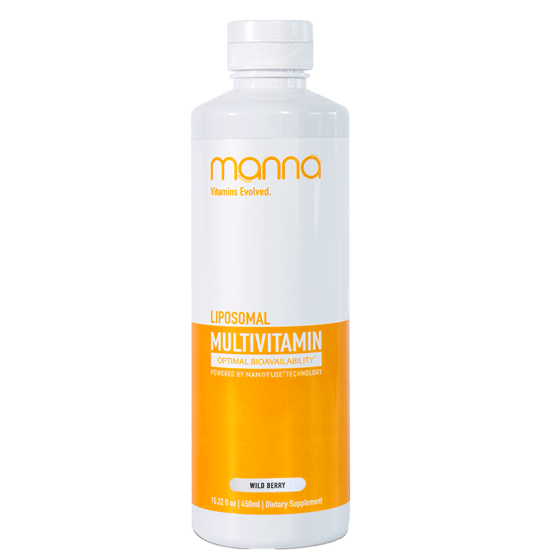
Liposomal encapsulation is a delivery technology in which nutrients are surrounded by a phospholipid layer, which may help protect certain vitamins and minerals from degradation in the digestive tract and support absorption. Manna's liposomal multivitamin uses this approach to deliver active nutrient forms in a format designed for bioavailability. That said, liposomal delivery isn't the only method that works—what matters most is that the forms on the label are ones your body can use.
A Label Checklist for Women
When you pick up a multivitamin, here's what to verify on the Supplement Facts panel:
- Folate as methylfolate (5-MTHF): Not folic acid. Especially important if you could become pregnant.
- Vitamin B₁₂ as methylcobalamin or adenosylcobalamin: Not cyanocobalamin.
- Vitamin D₃ (cholecalciferol): At least 1,000 IU.
- Magnesium as glycinate, citrate, or malate: Not oxide. Confirm the amount—many multis include only 50–100 mg, which is a start but not the full daily target. You may need a separate magnesium supplement if your diet is low.
- Vitamin K₂ (MK-7): Especially if the formula includes calcium or if you're over 40.
- Iron, if you're menstruating: 8–18 mg, ideally as ferrous bisglycinate. If postmenopausal or your provider says your levels are adequate, choose a formula without added iron.
- No unnecessary fillers, artificial colors, or coatings.
- Third-party testing for purity and label accuracy: Look for certification from independent labs (USP, NSF, or similar).
For a deeper dive on label evaluation, see our guide on how to choose a multivitamin.
Frequently Asked Questions
What is the best multivitamin for women over 50?
The best multivitamin for women over 50 is one that supports bone health (vitamin D₃, K₂, magnesium, calcium), provides B₁₂ in an active form (because absorption declines with age), and excludes high doses of iron unless your doctor has identified a need. Look for methylfolate, not folic acid, and well-absorbed mineral forms. Individual needs vary, so consult a healthcare provider if you have specific health concerns or take medications that may interact with certain nutrients.
What is the best multivitamin for women over 30?
Women in their thirties should look for a multivitamin that includes iron (if menstruating), methylfolate (especially if pregnancy is a possibility), vitamin D₃, and B₁₂ in active forms. Magnesium and other bone-supporting nutrients are also valuable. The "best" choice depends on your diet, lifestyle, and health status—there's no single product that fits everyone.
Should I take a women's multivitamin if I'm pregnant or breastfeeding?
Pregnancy and lactation increase the demand for many nutrients. A standard women's multivitamin may not provide enough of certain nutrients—particularly iron, folate, calcium, and DHA—recommended during pregnancy and breastfeeding. Prenatal vitamins are specifically formulated to meet those higher needs. Talk to your healthcare provider before starting or changing supplements during pregnancy or while breastfeeding.
Can a multivitamin replace a healthy diet?
No. A multivitamin is intended to fill gaps, not replace whole foods. Whole foods provide fiber, phytonutrients, and beneficial compounds that pills can't replicate. Think of a multivitamin as insurance for the nutrients you may not get enough of from diet alone, not as a substitute for vegetables, fruit, whole grains, and protein.
Do I need a multivitamin if I eat a balanced diet?
It depends. If your diet consistently provides adequate amounts of all essential nutrients—and if you've had lab work confirming that your levels are in healthy ranges—you may not need a multivitamin. In practice, many women have at least one or two nutrient gaps (vitamin D, magnesium, and B₁₂ are common), and a multivitamin can help cover those. Periodic blood work and a conversation with a healthcare provider can clarify whether supplementation makes sense for you.
Are there any risks to taking a multivitamin?
Multivitamins are generally considered safe when used as directed, but more isn't always better.[5] Fat-soluble vitamins (A, D, E, K) can accumulate in the body, and excessive intake over time may lead to adverse effects. Iron supplementation in people who don't need it can contribute to excess iron stores. Some nutrients may interact with medications—vitamin K, for example, can interfere with blood thinners. Choose a multivitamin that provides nutrients at levels close to recommended daily values, not mega-doses, and consult your healthcare provider if you take prescription medications or have existing health conditions.
The Bottom Line: Talk to Your Doctor
A good multivitamin for women should contain the nutrients that matter for your stage of life, in forms your body can actually absorb. That means methylfolate instead of folic acid, active B vitamins, well-absorbed magnesium, and appropriate iron based on your needs. It means vitamin D₃ and K₂ for bone support, especially as you approach and pass menopause.
What it does not mean is accepting marketing claims at face value or choosing based on brand recognition. Read the Supplement Facts panel. Ask questions. If you're unsure whether you need iron, or how much vitamin D is right for you, or whether a particular ingredient makes sense given your health history, talk to a healthcare professional. Lab work—ferritin, serum vitamin D, B₁₂—can show you where you stand and whether supplementation is likely to help.
Nutritional needs are individual. A multivitamin can't replace medical advice, and no supplement should be used to diagnose, treat, cure, or prevent any disease. The evidence supports a thoughtful, informed approach: choose a formulation that matches your life stage, prioritize bioavailable forms, and make decisions in partnership with someone who knows your health history.
These statements have not been evaluated by the Food and Drug Administration. This product is not intended to diagnose, treat, cure, or prevent any disease.
Sources
- Matthews-Rensch K et al. The Australasian Society of Parenteral and Enteral Nutrition: Consensus statements on refeeding syndrome. Nutrition & dietetics : the journal of the Dietitians Association of Australia (2025).
- Vyas CM et al. Effect of multivitamin-mineral supplementation versus placebo on cognitive function: results from the clinic subcohort of the COcoa Supplement and Multivitamin Outcomes Study (COSMOS) randomized clinical trial and meta-analysis of 3 cognitive studies within COSMOS. The American journal of clinical nutrition (2024).
- Wilson RD et al. Guideline No. 427: Folic Acid and Multivitamin Supplementation for Prevention of Folic Acid-Sensitive Congenital Anomalies. Journal of obstetrics and gynaecology Canada : JOGC = Journal d'obstetrique et gynecologie du Canada : JOGC (2022).
- Evans JR et al. Antioxidant vitamin and mineral supplements for slowing the progression of age-related macular degeneration. The Cochrane database of systematic reviews (2023).
- Biesalski HK et al. Multivitamin/mineral supplements: Rationale and safety. Nutrition (Burbank, Los Angeles County, Calif.) (2017).
- Crider K et al. Folic acid supplementation and malaria susceptibility and severity among people taking antifolate antimalarial drugs in endemic areas. The Cochrane database of systematic reviews (2022).
This article is for educational purposes only and is not medical advice. These statements have not been evaluated by the Food and Drug Administration. Manna products are not intended to diagnose, treat, cure, or prevent any disease. Consult your healthcare provider before starting any new supplement, especially if you are pregnant, nursing, taking medication, or managing a medical condition.
Frequently asked questions
Wellness that actually works
Liposomal Multivitamin
10x better absorption than traditional vitamins. The daily foundation.
Explore Manna's clinically-informed liposomal supplements.
Keep reading



Feel the difference absorption makes.
Start today, backed by our 90-day money-back guarantee. Free U.S. shipping on every subscription.