
Choosing a Multivitamin After 50: What Older Adults Actually Need
By The Manna Editorial Team · August 10, 2026
9 min read

Evidence-based. This article was written and fact-checked by the Manna Editorial Team against the peer-reviewed research cited throughout.
Quick answer: The best multivitamin for seniors over 70 prioritizes nutrient forms your body can actually absorb—especially methylated B12, vitamin D3, chelated magnesium, and vitamin K2—in a format that's easy to swallow and digest as stomach acid production declines with age.
How Absorption Changes After 50–60
You've probably heard that nutritional needs change as you age. What gets less attention is that your ability to extract nutrients from food and supplements changes, too—and in ways that make the form and delivery of a multivitamin matter much more than it did at 30.
Here's what's actually going on.
Stomach acid production declines steadily after age 50. That matters because acid isn't just for breaking down food—it's essential for cleaving protein-bound nutrients like vitamin B12 from their carriers and converting certain minerals into absorbable forms.[3] Lower acid means less efficient extraction, even when dietary intake looks adequate on paper.
Intrinsic factor—a protein your stomach makes to shuttle B12 across the intestinal wall—also declines with age and is affected by common medications like proton pump inhibitors and metformin. The result: an estimated 10-30% of adults over 60 have some degree of B12 malabsorption, even without diagnosed deficiency.[3]
Add to that age-related changes in kidney function (which affects vitamin D activation), reduced intestinal surface area, slower cell turnover, and the fact that many older adults take medications that interfere with nutrient uptake, and you get a picture where what's on the label matters less than what your body can actually use.[2]
Nutrients That Matter More With Age
Not all vitamins and minerals deserve equal weight in a multivitamin for older adults. Some become harder to get or use efficiently; others play outsized roles in the systems—bone, cognitive, cardiovascular—that require more support after 60.
Vitamin B12
This is the nutrient most affected by age-related absorption decline. B12 supports red blood cell formation, DNA synthesis, and neurological function. Deficiency can present as fatigue, cognitive fog, nerve issues, or anemia—symptoms often mistaken for "normal aging."[3]
The catch: most conventional multivitamins use cyanocobalamin, a synthetic form that requires conversion in the liver before your body can use it. Methylcobalamin—the active, methylated form—bypasses that step and may be better absorbed, especially when stomach acid and intrinsic factor are compromised. For older adults, this isn't a minor detail.
Vitamin D
Your skin's ability to synthesize vitamin D from sunlight drops by roughly 50% between age 20 and 70. Meanwhile, vitamin D becomes more important—it supports calcium absorption, bone health, immune function, and muscle strength, all areas where older adults face increased risk.[6]
Look for D3 (cholecalciferol), the form your body makes naturally, rather than D2. Dosing typically ranges from 1,000 to 2,000 IU in a multivitamin, though many adults over 60 need more based on blood work—a conversation worth having with your doctor.
Magnesium
Magnesium supports more than 300 enzymatic reactions, including those involved in bone structure, muscle function, blood pressure regulation, and glucose metabolism. Dietary intake tends to fall short across all age groups, but absorption decreases and urinary losses increase with age.[2]
Nutrient form matters here. Magnesium oxide—common in cheaper formulas—has poor bioavailability and often causes digestive upset. Chelated forms like magnesium glycinate or citrate are gentler and better absorbed.
Vitamin K2
While K1 (found in leafy greens) supports blood clotting, K2 activates proteins that direct calcium into bones and teeth rather than soft tissues like arteries. This becomes critical after 50, when vascular calcification and bone loss both accelerate. K2 works synergistically with vitamin D and magnesium to support healthy bone density and cardiovascular function.
Vitamin B6
B6 (especially in its active form, pyridoxal-5-phosphate) supports neurotransmitter synthesis, immune health, and homocysteine metabolism—an amino acid that, when elevated, is associated with cognitive and cardiovascular concerns. Requirements may increase slightly with age, and the methylated form is more bioavailable for those with genetic variations affecting B vitamin metabolism.
Why Nutrient Form and Delivery Matter More, Not Less
If your body absorbed nutrients with the same efficiency at 70 as it did at 30, a standard tablet multivitamin would be fine. But that's not the case—and the form in which a nutrient is delivered becomes a bigger determinant of whether it actually reaches your cells.
Consider two common approaches:
Conventional tablets compress nutrients with binders and fillers into a dense mass that must disintegrate in the stomach, dissolve, and pass through the intestinal wall. When stomach acid is lower and digestion slower, this process becomes less reliable. Studies on malnutrition in older adults note that even adequate dietary intake doesn't guarantee adequate nutrient status when absorption pathways are compromised.[2]
Liposomal delivery wraps nutrients in phospholipid bubbles—mimicking the structure of your cell membranes—that protect the nutrient through digestion and facilitate direct uptake at the cellular level. This delivery method bypasses some of the barriers (low acid, reduced intrinsic factor) that make oral absorption less efficient with age. It's why liposomal multivitamins have gained traction among practitioners working with older patients.
Methylated forms—like methylcobalamin (B12), methylfolate (B9), and pyridoxal-5-phosphate (B6)—are already in the active state your body uses, so they don't depend on conversion steps that become less efficient with aging or genetic polymorphisms like MTHFR. For a deeper dive on this, see our guide to methylated multivitamins.
The point isn't that every senior needs liposomal or methylated forms—it's that when absorption is a known variable, choosing nutrient forms designed to work with those limitations is the practical move.
Swallowing and Format: The Case for Liquids
Absorption aside, there's a simpler issue that affects millions of older adults: difficulty swallowing pills.
Dysphagia—trouble swallowing—affects roughly 15% of older adults in the general population and much higher percentages in those with neurological conditions, stroke history, or chronic illness.[2] Even without a diagnosed swallowing disorder, many people find large tablets uncomfortable or anxiety-inducing, which leads to skipped doses or abandoned supplement routines.
Liquid multivitamins—especially those designed to be taken by the teaspoon or mixed into water—remove that barrier entirely. They also eliminate the need for a tablet to disintegrate before nutrients become available, which can be an advantage when gastric motility slows.
For a comparison of liquid versus pill absorption and practical considerations, our article on liquid vitamins walks through the trade-offs in detail.
What to Be Cautious About
Choosing a multivitamin for older adults isn't just about what to include—it's also about what to limit or avoid.
Iron
Unless you have documented iron deficiency (common in older women with heavy menstrual bleeding before menopause, but rare in men and postmenopausal women), a multivitamin with added iron may do more harm than good. Excess iron can accumulate in tissues and has been associated with oxidative stress. Many formulas marketed to older adults are iron-free for this reason.
Mega-Doses
More is not always better. Extremely high doses of fat-soluble vitamins (A, D, E, K) can accumulate in the body, and excess of certain minerals can interfere with the absorption of others or interact with medications. A well-designed multivitamin for seniors should provide meaningful amounts of key nutrients—often 100-200% of the Daily Value—without veering into megadose territory.
Drug-Nutrient Interactions
Common medications in older adults—statins, blood thinners, diabetes drugs, antacids—can interact with certain vitamins and minerals. Vitamin K, for example, can interfere with warfarin. Calcium and magnesium can reduce the absorption of some antibiotics and thyroid medications. This is not a reason to avoid multivitamins; it's a reason to review your supplement regimen with your doctor or pharmacist, especially if you're on multiple medications.
Fillers and Allergens
Check for unnecessary fillers, artificial colors, and common allergens (gluten, soy, dairy) if you have sensitivities. Clean formulas are easier on aging digestive systems and reduce the risk of inflammatory responses.
A Label Checklist for Older Adults
When comparing multivitamins, use this as a practical screening tool:
- Vitamin B12: Look for methylcobalamin at 500-1,000 mcg (higher doses compensate for reduced absorption)
- Vitamin D: D3 (cholecalciferol), ideally 1,000-2,000 IU or higher based on your levels
- Magnesium: Chelated forms (glycinate, citrate), 100-200 mg
- Vitamin K2: Preferably as MK-7, 45-120 mcg
- Folate: Methylfolate (5-MTHF), not folic acid
- Vitamin B6: Pyridoxal-5-phosphate (P5P) if available
- Iron: Absent unless you have confirmed deficiency
- Format: Liquid or small capsules if swallowing is a concern; liposomal if absorption is a priority
- Third-party testing: Look for NSF, USP, or similar certification for purity and potency
For a broader framework on multivitamin selection across age groups, see our guide on how to choose a multivitamin.
Key Nutrients Compared: What to Look For After 50
| Nutrient | Why it matters after 50 | Form to look for |
|---|---|---|
| Vitamin B12 | Absorption declines due to lower stomach acid and intrinsic factor; supports nerve function, red blood cells, and cognition | Methylcobalamin (active form), 500-1,000 mcg |
| Vitamin D | Skin synthesis drops by ~50%; critical for bone health, immune function, and muscle strength | D3 (cholecalciferol), 1,000-2,000+ IU |
| Magnesium | Supports bone density, muscle function, blood pressure; absorption decreases and losses increase with age | Chelated forms: glycinate, citrate, malate (avoid oxide) |
| Vitamin K2 | Directs calcium into bones rather than arteries; works with D and magnesium for bone and cardiovascular support | MK-7 (menaquinone-7), 45-120 mcg |
FAQ
Do I need a multivitamin if I eat a balanced diet?
A varied, nutrient-dense diet is the foundation—but absorption changes and medication interactions mean that even well-nourished older adults can develop subclinical deficiencies, particularly in B12, vitamin D, and magnesium. A multivitamin acts as insurance, not replacement.
Should women over 70 take a different formula than men?
Nutritional needs are more similar after menopause than before. Both benefit from higher B12, D, magnesium, and K2. The main difference: women are at higher risk for osteoporosis, so adequate calcium (from diet and/or supplements), vitamin D, and K2 are especially important. Men generally don't need added iron.
Can a multivitamin interact with my medications?
Yes. Vitamin K can affect blood thinners; calcium and magnesium can interfere with certain antibiotics, thyroid medication, and bisphosphonates; antacids and metformin reduce B12 absorption. Bring your supplement bottle to your doctor or pharmacist for a review—this is routine and important.
Is a "senior" multivitamin really different from a regular one?
In a well-designed formula, yes. Senior-specific multivitamins typically have higher B12 and D, more bioavailable magnesium, added K2, no iron (or low iron), and sometimes enhanced absorption technology like liposomal delivery or methylated B vitamins. Generic "one-a-day" formulas often don't account for these shifts.
How do I know if my multivitamin is actually being absorbed?
Blood work is the clearest measure—tracking vitamin D (25-OH), B12, magnesium RBC, and other markers over time. Your doctor can help interpret trends. Subjectively, improvements in energy, cognition, or muscle function over weeks to months can also be telling, though these are harder to attribute to a single intervention.
Talk to Your Doctor
The best multivitamin for seniors over 70—or 60, or 50—is the one that fits your individual health picture: your diet, medications, lab values, absorption capacity, and health goals. This guide is designed to help you ask better questions and evaluate options with more clarity, but it does not replace personalized medical advice.
Before starting any new supplement, especially if you take prescription medications or have a chronic health condition, consult your healthcare provider. Bring your current medication list, any recent blood work, and the label of the multivitamin you're considering. A good clinician will appreciate the homework.
These statements have not been evaluated by the Food and Drug Administration. This product is not intended to diagnose, treat, cure, or prevent any disease.
Sources
- Neufingerl N et al. Nutrient Intake and Status in Adults Consuming Plant-Based Diets Compared to Meat-Eaters: A Systematic Review. Nutrients (2021).
- Norman K et al. Malnutrition in Older Adults-Recent Advances and Remaining Challenges. Nutrients (2021).
- Green R et al. Vitamin B(12) deficiency. Nature reviews. Disease primers (2017).
- Rayman MP Selenium and human health. Lancet (London, England) (2012).
- Felsenfeld AJ et al. Approach to treatment of hypophosphatemia. American journal of kidney diseases : the official journal of the National Kidney Foundation (2012).
- Pludowski P et al. Vitamin D supplementation guidelines. The Journal of steroid biochemistry and molecular biology (2018).
This article is for educational purposes only and is not medical advice. These statements have not been evaluated by the Food and Drug Administration. Manna products are not intended to diagnose, treat, cure, or prevent any disease. Consult your healthcare provider before starting any new supplement, especially if you are pregnant, nursing, taking medication, or managing a medical condition.
Frequently asked questions
Wellness that actually works
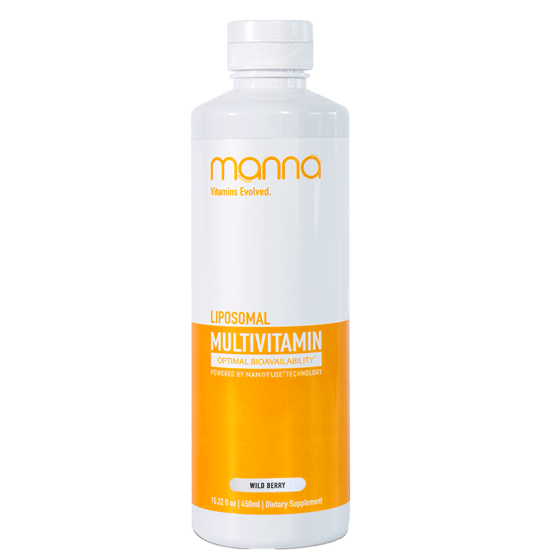
Liposomal Multivitamin
10x better absorption than traditional vitamins. The daily foundation.
Explore Manna's clinically-informed liposomal supplements.
Keep reading



Feel the difference absorption makes.
Start today, backed by our 90-day money-back guarantee. Free U.S. shipping on every subscription.