
Magnesium Glycinate vs. Citrate: Which Form Is Right for You?
By Ryan · August 11, 2026
6 min readLast reviewed August 11, 2026

You're standing in the supplement aisle—or scrolling through pages of magnesium capsules—and the label varieties are staggering. Magnesium glycinate, citrate, oxide, malate, threonate. They all say "magnesium," they're all essential minerals, but the price tags and marketing claims are all over the map. Here's what's actually going on.
Different forms of magnesium bind the mineral to different compounds, and those compounds change how well your body absorbs the magnesium and how your digestive system reacts. This isn't about one form being "better" in every context—it's about matching the right form to what you're trying to support and how your body responds.
The Quick Answer: Magnesium Glycinate vs Citrate
If you want a short decision tree before diving into the details:
- Magnesium glycinate is bound to the amino acid glycine. It's absorbed well, gentle on the stomach, and glycine itself has calming properties. If you're looking for general supplementation, supporting muscle relaxation, or promoting calm and healthy sleep patterns—and especially if you have a sensitive digestive system—glycinate is usually the best starting point.
- Magnesium citrate is bound to citric acid. It's also well-absorbed, but it draws water into your intestines. That makes it effective for occasional digestive regularity, but it can cause loose stools if you're not looking for that effect.
That difference—absorption paired with digestive tolerability—is the main distinction you're navigating across all magnesium forms.
Understanding Magnesium Forms: What the Compound Actually Does
Magnesium doesn't travel alone. In supplements, it's always bonded to another molecule—a salt, an amino acid, or an organic acid. That partner compound affects two things: how much elemental magnesium you're getting per dose, and how your body processes it.
When you see "magnesium glycinate 500 mg," that's the total weight of the compound, not pure magnesium. Glycinate, for example, is about 14% elemental magnesium by weight. The rest is glycine. That's not filler—the glycine plays a role in absorption and tolerability.
The partner molecule also determines where and how the magnesium is released. Some forms break down in the stomach. Others make it further into the intestines before dissolving. That changes both how much magnesium enters your bloodstream and whether it pulls water into your gut along the way.
Magnesium Glycinate vs Citrate vs Oxide vs Malate vs Threonate: A Side-by-Side Look
Magnesium Glycinate
Bound to glycine, an amino acid with its own calming effects on the nervous system. Glycinate is absorbed efficiently and causes minimal digestive upset—even at higher doses. This form is often chosen by people looking to support relaxation, normal muscle function, or healthy sleep without the laxative effect. It's one of the most gentle options for long-term daily use.
Magnesium Citrate
Bound to citric acid. The difference between magnesium citrate and glycinate comes down to how each interacts with your gut. Citrate is well-absorbed, but it's also osmotic—it draws water into the intestines, which can help promote regularity. That's useful if you're occasionally looking for that effect, but it can be inconvenient or uncomfortable if you're not. For general supplementation, citrate works well for some people and not others; digestive tolerance varies.
Magnesium Oxide
The comparison of magnesium glycinate vs oxide is stark. Oxide is inexpensive and has a high percentage of elemental magnesium by weight, but it's poorly absorbed—often cited around 4% bioavailability in studies. Most of it passes through your digestive tract, which is why oxide is sometimes used specifically for its laxative properties. For raising magnesium levels in the body, it's not an efficient choice.
Magnesium Malate
Bound to malic acid, an organic acid involved in cellular energy production. The magnesium malate vs glycinate question often comes up in the context of physical energy and muscle comfort. Malate is reasonably well-absorbed and tends to be gentler on digestion than citrate, though not quite as neutral as glycinate. Some people find it supportive for daytime use, particularly around physical activity.
Magnesium Threonate
Bound to threonic acid, a compound that appears in some animal research to cross the blood-brain barrier more readily than other forms. Magnesium threonate vs glycinate is a common comparison for cognitive support. Threonate is the most expensive form, and while the preliminary research is interesting, the evidence in humans is still limited. It's well-tolerated digestively, but the cost and narrow focus make it a specialized choice rather than a general-use form.
How to Choose: Matching the Form to Your Goal
Start with what you're trying to support and how your digestive system typically responds to supplements.
If you have a sensitive stomach or want general daily magnesium supplementation: Glycinate is the most consistently well-tolerated. It supports muscle relaxation, nervous system function, and bone health without causing digestive side effects for most people.
If you're occasionally looking for digestive regularity: Citrate's osmotic effect can be helpful in that context. Just know that the same property makes it less ideal for people who don't want that response.
If you're on a tight budget and only occasionally using magnesium: Oxide is inexpensive, but be aware that absorption is low. You're getting less usable magnesium per milligram than you would with other forms.
If you're active and focused on muscle recovery: Malate is worth considering. It's absorbed reasonably well and the malic acid component is involved in energy metabolism.
If you're specifically interested in cognitive support and cost isn't a barrier: Threonate has some early-stage research behind it, but temper expectations. It's not a magic bullet, and the human data is still developing.
Absorption and Bioavailability: What Actually Gets Into Your System
Bioavailability—the percentage of magnesium that actually enters your bloodstream—is the central variable here. Traditional capsules and tablets rely on your digestive system to break down the compound, release the magnesium, and absorb it through the intestinal wall. That process is influenced by stomach acid, digestive enzymes, gut motility, and what else you've eaten.
Even the better-absorbed forms like glycinate and citrate don't get close to 100% bioavailability through standard delivery. A portion is always lost in digestion.
For a deeper look at how different delivery methods affect absorption, you can read more in our Bioavailability 101 guide.
Where Liposomal Magnesium Fits
Liposomal encapsulation is a delivery technology that wraps the magnesium in a phospholipid layer—essentially a tiny fat bubble that mimics your cell membranes. The idea is that this structure protects the magnesium as it moves through the digestive tract and may allow it to be absorbed more efficiently, bypassing some of the usual digestive breakdown.
The research on liposomal minerals is still emerging, and results vary depending on the formulation quality and the specific nutrient. It's not a universal solution, but for people who don't tolerate traditional magnesium forms well or want to maximize absorption from a smaller dose, it's worth understanding as an option.
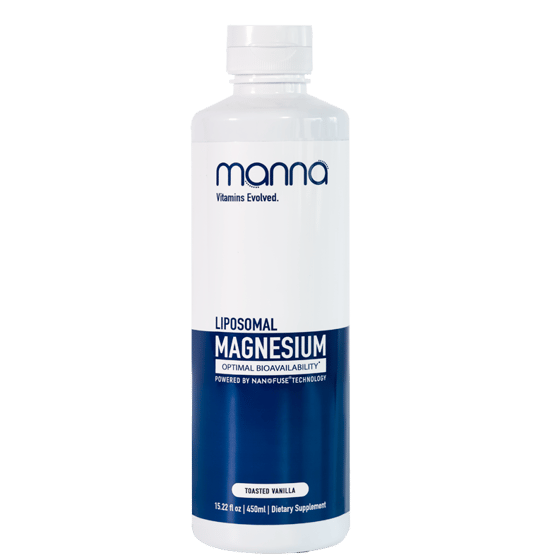
Manna's liposomal magnesium uses this approach, combining the gentle profile of magnesium with phospholipid encapsulation designed to support efficient uptake. As with any supplement, individual responses vary, and it's worth discussing your needs with a healthcare professional.
What About Dosing?
The recommended dietary allowance for magnesium varies by age and sex—generally 310–420 mg of elemental magnesium per day for adults. Remember that "elemental magnesium" is the key number, not the total weight of the compound on the label.
If you're taking magnesium glycinate labeled as 500 mg per capsule, you're getting around 70 mg of elemental magnesium. Check the supplement facts panel to see the actual magnesium content. Some labels list both; others only show the compound weight.
More isn't automatically better. Taking high doses of poorly absorbed forms can lead to digestive distress without meaningfully raising your magnesium levels. Taking high doses of well-absorbed forms can exceed what your body needs and cause similar issues. If you're unsure where you stand, a healthcare provider can assess your magnesium status and help determine an appropriate dose.
The Bottom Line
The magnesium citrate vs glycinate decision—and the broader question of which magnesium form to choose—comes down to absorption, tolerability, and what you're trying to support. Glycinate is gentle and versatile. Citrate is effective but can affect digestion. Oxide is cheap but poorly absorbed. Malate and threonate are more specialized.
No form is inherently superior across the board. The "right" magnesium is the one that fits your digestive tolerance, your goals, and your budget—and that you'll actually take consistently. If you've tried one form and it didn't work for you, that doesn't mean magnesium supplementation isn't worth pursuing. It often just means trying a different form or a different delivery method.
Before starting any new supplement, especially if you have existing health conditions or take medications, talk to your healthcare provider. Magnesium can interact with certain medications, and individual needs vary widely.
These statements have not been evaluated by the Food and Drug Administration. This product is not intended to diagnose, treat, cure, or prevent any disease.
- OxideLow absorb.
- CitrateModerate
- GlycinateGood
- LiposomalHigh
Illustrative comparison based on published bioavailability research — not a single head-to-head trial. Individual tolerance varies.
References
- 01NIH Office of Dietary Supplements — Magnesium — Absorption differences between magnesium forms and daily requirements.
This article is for educational purposes only and is not medical advice. These statements have not been evaluated by the Food and Drug Administration. Manna products are not intended to diagnose, treat, cure, or prevent any disease. Consult your healthcare provider before starting any new supplement, especially if you are pregnant, nursing, taking medication, or managing a medical condition.
Frequently asked questions
Wellness that actually works
Liposomal Magnesium
The master mineral
Explore Manna's clinically-informed liposomal supplements.
Keep reading




Feel the difference absorption makes.
Start today, backed by our 90-day money-back guarantee. Free U.S. shipping on every subscription.