
Choosing a Multivitamin for Men: What the Evidence Supports
By The Manna Editorial Team · August 10, 2026
13 min read

Evidence-based. This article was written and fact-checked by the Manna Editorial Team against the peer-reviewed research cited throughout.
Quick answer: A good multivitamin for men should contain B vitamins, vitamin D, magnesium, zinc, and selenium at evidence-based doses; it should skip or limit iron (most men get plenty from food); and it should use bioavailable forms with delivery technology that supports absorption.
You've probably scrolled past a dozen "Top 10 Men's Multivitamins" lists, each one ranking brands you've never heard of with suspiciously identical star ratings. Maybe your doctor mentioned that your vitamin D was low, or you're in your fifties and wondering whether a multivitamin is worth the money. Here's what's actually going on: the question isn't which brand wins an imaginary tournament. The question is what to look for in a men's multivitamin — and why most of what's marketed to men misses the mark.
This guide walks through the nutrients that support men's health, the forms and doses that matter, and the absorption criteria that determine whether a supplement does anything at all. We're Manna, a supplement company, and we make a liposomal multivitamin. We'll be clear when we're talking about our own product. What follows is education, not prescription — decisions about supplementation belong with you and your healthcare provider.
Why Most Men's Multivitamins Skip Iron (and When That's Right)
Open a men's multivitamin and compare it to a women's formula: one of the first differences you'll notice is iron. Most men's formulas contain little to none; women's formulas often deliver 100% of the Daily Value or more. That's intentional, and for most men, it's appropriate.
Premenopausal women lose iron monthly through menstruation, which is why they're at higher risk of iron deficiency. Men — and postmenopausal women — do not have routine iron losses. The body tightly regulates iron absorption, and once iron stores are adequate, there's no normal physiological route to shed excess. Because red meat, fortified grains, and even plant foods contribute dietary iron, most adult men meet or exceed their needs through food alone.
Too much iron, on the other hand, can be a problem. Excess iron is stored in tissues and may contribute to oxidative stress over time. Men with hereditary hemochromatosis — a condition where the body absorbs iron excessively — can experience serious organ damage if they supplement iron unnecessarily. Unless you have diagnosed iron-deficiency anemia or documented low ferritin, added iron in a daily multivitamin is not only unnecessary for most men; it can be counterproductive.
Check your label. A men's multivitamin that contains 0–5 mg of iron (or none at all) is generally a better choice than one delivering 18 mg or more. If you suspect low iron or have been advised to supplement it, that's a separate, targeted decision to make with a healthcare professional, not a default feature of a daily multi.
Nutrients That Matter for Men: B Vitamins, D, Magnesium, Zinc, Selenium
The best multivitamin for men isn't the one with the longest ingredient list. It's the one that delivers the nutrients men are most likely to need, at doses that make physiological sense. Research on dietary gaps and nutrient status surveys points to a short list of priorities.[2]
B Vitamins: Methylation, Energy Metabolism, and Nervous System Support
The B-complex vitamins — B1 (thiamine), B2 (riboflavin), B3 (niacin), B5 (pantothenic acid), B6 (pyridoxine), B7 (biotin), B9 (folate), and B12 (cobalamin) — are water-soluble vitamins that support hundreds of enzymatic reactions. They're central to converting food into usable energy, synthesizing neurotransmitters, and maintaining the methylation cycle that regulates gene expression and homocysteine metabolism.
Men eating varied diets usually get adequate B vitamins from grains, meat, eggs, and leafy greens. But certain groups — older adults with reduced stomach acid (which impairs B12 absorption), people taking metformin or proton-pump inhibitors, heavy drinkers, and those following restrictive diets — are at higher risk of deficiency. A multivitamin that includes the full B-complex in active or bioavailable forms (methylfolate instead of folic acid, methylcobalamin or adenosylcobalamin instead of cyanocobalamin) offers a baseline safety net without requiring mega-doses.
Vitamin D: Bone Health, Immune Function, and Widespread Receptors
Vitamin D is technically a hormone. Your skin synthesizes it from sunlight, but latitude, season, skin tone, sunscreen use, and time spent indoors all limit production. Many men — especially those living north of the 37th parallel or working office jobs — have suboptimal vitamin D status. Vitamin D supports calcium absorption for bone health, modulates immune cell activity, and binds receptors in tissues throughout the body.
A good multivitamin for men typically includes 1,000–2,000 IU (25–50 mcg) of vitamin D3 (cholecalciferol), the form most efficiently converted to the active hormone. That's a maintenance dose, not a corrective one. If your serum 25-hydroxyvitamin D is below 30 ng/mL, your doctor may recommend a higher standalone dose. But for daily foundational intake, a multi with D3 in that range is sensible.
Magnesium: Muscle Function, Bone Density, and Metabolic Health
Magnesium is involved in over 300 biochemical reactions — muscle contraction, nerve transmission, blood glucose control, and bone mineralization among them. Dietary surveys suggest that many American men consume less magnesium than recommended, particularly if they avoid whole grains, nuts, seeds, and leafy greens.
Magnesium is bulky, so most multivitamins can't fit a full daily dose (420 mg for adult men) into a single pill alongside other nutrients. A multivitamin that delivers 100–200 mg of magnesium in a well-absorbed form — magnesium citrate, glycinate, or malate rather than oxide — provides meaningful support without requiring a separate supplement for many men. If you take additional magnesium for muscle relaxation or regularity, account for what your multi already provides.
Zinc: Immune Support, Protein Synthesis, and Hormonal Health
Zinc is a trace mineral essential for immune cell function, protein synthesis, DNA replication, and the activity of over 100 enzymes. It also plays a role in testosterone production and sperm health. Men who eat red meat, poultry, and shellfish generally meet their zinc needs; vegetarians and older adults may fall short.
Look for a multivitamin that provides 10–15 mg of zinc, ideally as zinc citrate, picolinate, or glycinate. Doses above 40 mg daily, taken long-term, can interfere with copper absorption and immune function, so more is not better. Avoid products that market zinc as a testosterone booster without evidence — zinc supports normal hormonal function when status is adequate, but supplementation does not raise testosterone in men with normal zinc levels.
Selenium: Antioxidant Defense and Thyroid Function
Selenium is a cofactor for antioxidant enzymes (glutathione peroxidases) and thyroid hormone metabolism. It's found in Brazil nuts, seafood, meat, and grains, but soil selenium content varies by region, so dietary intake can be inconsistent.
A men's multivitamin should include 50–100 mcg of selenium, typically as selenomethionine or selenium yeast. The upper tolerable limit is 400 mcg per day; chronic intake above that can cause toxicity (selenosis). Stick with multivitamin doses in the 50–100 mcg range unless a healthcare provider has identified a specific need.
Energy Metabolism vs. 'Energy' Marketing: Honest Framing
Every men's multivitamin promises "energy." The label says it. The ad says it. Your gym buddy swears by it. But here's what that word actually means, and what it doesn't.
B vitamins, magnesium, and other cofactors support cellular energy metabolism — the biochemical process of converting glucose, fats, and proteins into ATP, the molecule your cells use for fuel. If you are deficient in these nutrients, that machinery doesn't run efficiently, and you may feel fatigued. Correcting a deficiency can restore normal energy production.
What supplementation does not do is create energy out of thin air or amplify your energy beyond normal physiological capacity if you're already nutrient-replete. You will not feel a caffeine-like buzz from a multivitamin, and if you do, it's probably not the vitamins — it may be added herbs, stimulants, or placebo effect. A multivitamin helps maintain the baseline cellular function that supports everyday metabolism. That's valuable. It's also not the same as an energy drink.
When evaluating marketing claims, ask: Does this product promise to "support healthy energy metabolism" (a structure/function claim grounded in biochemistry), or does it promise to "boost," "skyrocket," or "supercharge" your energy (language that implies a drug-like effect)? The former is honest. The latter is hype. Understanding what multivitamins can and cannot do helps set realistic expectations.
Doses: Enough, Not Mega-Doses
More is not always better, and in some cases, it's worse. The supplement industry has long marketed mega-dose formulas — 1,000% of the Daily Value for B vitamins, 10,000 IU of vitamin A — under the assumption that flooding the body with nutrients produces superior results. The evidence does not support that assumption.[3]
Water-soluble vitamins like B and C are excreted in urine when intake exceeds what the body can use, making mega-doses expensive urine in most cases. Fat-soluble vitamins (A, D, E, K) are stored in tissues, and chronic high doses can accumulate and cause toxicity. Vitamin A over 10,000 IU daily, for example, has been associated with liver damage and bone issues in some populations. High-dose vitamin E supplementation has not shown clear benefit for disease prevention and may carry risks in certain contexts.[4]
The best multivitamin for men over 50 — or any age — provides nutrients at doses that fill realistic gaps without exceeding safe upper limits. For most nutrients, that means 100–200% of the Daily Value. For a few — like magnesium, which is bulky, or vitamin K, which can be obtained from greens — a multivitamin might provide less than 100%, and that's fine if it's part of a broader dietary pattern.
Check the Supplement Facts panel. If you see 5,000% DV for B12 or 500 mg of vitamin C in a daily multi, ask why. In some cases (B12 for vegans or older adults with absorption issues), higher doses make sense. In others, it's marketing theater. A thoughtfully formulated product uses evidence-based doses, not shock-and-awe numbers.
Form and Absorption Criteria: Delivery Matters
A nutrient listed on a label is only as good as your body's ability to absorb and use it. The chemical form of each vitamin and mineral — and the delivery system that carries it — determines bioavailability.
Active and Bioavailable Forms
Some nutrients require conversion in the body before they become metabolically active. Folic acid, the synthetic form of folate, must be converted to methylfolate (5-MTHF) by the enzyme MTHFR. Roughly 40% of people carry genetic variants that reduce MTHFR activity, making methylfolate a more universally bioavailable choice. Similarly, cyanocobalamin (the cheap, stable form of B12) must be converted to methylcobalamin or adenosylcobalamin; providing the active forms directly bypasses that step.
For minerals, look for chelated or organic forms. Magnesium oxide is poorly absorbed; magnesium glycinate or citrate is far more bioavailable. Zinc oxide is common in cheap multivitamins; zinc picolinate or citrate is better absorbed. These differences are not trivial — they determine how much of the listed dose actually reaches your cells.
Liposomal and Phospholipid Delivery
Traditional tablets and capsules rely on passive diffusion and active transport in the gut, which can be inefficient for certain nutrients. Liposomal delivery — encapsulating nutrients in phospholipid spheres that mimic cell membranes — enhances absorption by protecting nutrients from degradation in the digestive tract and facilitating uptake into cells.
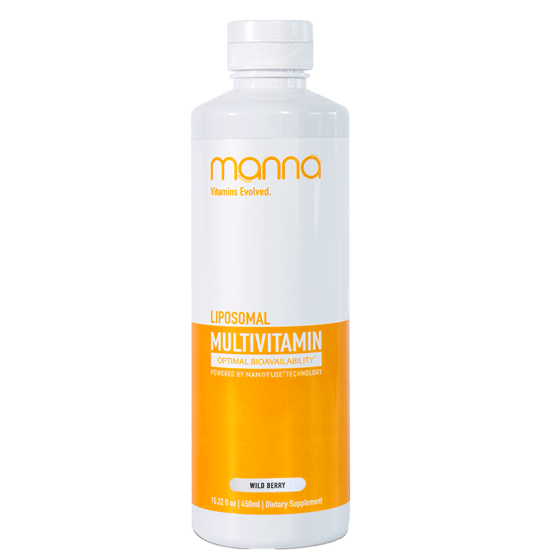
Liposomal multivitamins are a newer category, and not every product labeled "liposomal" uses true liposome technology (some use emulsions or micelles, which are not the same). When evaluating absorption claims, look for transparency about the delivery mechanism and third-party testing. Manna's liposomal multivitamin uses phosphatidylcholine-based liposomes, independently verified for particle size and encapsulation efficiency.
Additives, Fillers, and Allergens
Check the "Other Ingredients" list. Some multivitamins contain artificial colors, titanium dioxide, hydrogenated oils, or high amounts of sugar or sugar alcohols (common in gummy formulas). If you have food sensitivities, confirm the product is free of gluten, soy, dairy, or other allergens. A clean formula prioritizes the active nutrients and uses minimal, functional excipients.
A Label Checklist for Men: What to Look For
When comparing multivitamins, use this checklist to evaluate whether a product meets evidence-based criteria:
- Iron content: 0–5 mg or none, unless you have a diagnosed deficiency.
- Vitamin D3: 1,000–2,000 IU (25–50 mcg) as cholecalciferol.
- B vitamins: Full complex in active forms (methylfolate, methylcobalamin, etc.), at 100–200% DV.
- Magnesium: 100–200 mg in a bioavailable form (citrate, glycinate, malate).
- Zinc: 10–15 mg as citrate, picolinate, or glycinate.
- Selenium: 50–100 mcg as selenomethionine or yeast.
- No mega-doses: Avoid products with 1,000%+ DV of any nutrient unless there's a specific therapeutic reason.
- Bioavailable forms: Chelated minerals, active B vitamins, D3 (not D2).
- Delivery technology: Liposomal or other absorption-enhancing systems where transparent.
- Third-party testing: COA (certificate of analysis) for purity, potency, and contaminants.
- Clean label: Minimal additives, free of major allergens if needed.
A product that checks these boxes is a stronger candidate than one that simply lists 50 ingredients at random doses or markets itself with vague "male vitality" branding.
| Goal | Nutrients that support it | What to check |
|---|---|---|
| Everyday energy metabolism | B vitamins (B1, B2, B3, B5, B6, B12), magnesium, iron (if deficient) | Active B vitamin forms (methylfolate, methylcobalamin), bioavailable magnesium (citrate, glycinate), appropriate iron dose (low or none for most men) |
| Immune and everyday wellness | Vitamin D, zinc, selenium, vitamin C | D3 at 1,000–2,000 IU, zinc 10–15 mg (citrate/picolinate), selenium 50–100 mcg, vitamin C in moderate doses |
| Healthy aging | Antioxidant vitamins (C, E), selenium, zinc, B vitamins for methylation, vitamin D for bone | Avoid mega-doses of antioxidants; check for balanced, evidence-based doses; confirm D3 and active B vitamins included |
Frequently Asked Questions
What is the best multivitamin for men over 50?
The best multivitamin for men over 50 is one that addresses the nutrients most commonly under-consumed or poorly absorbed in this age group: vitamin D (for bone health and immune support), B12 (absorption declines with age and reduced stomach acid), magnesium (for muscle and metabolic health), and antioxidants like selenium and zinc. It should contain little to no iron unless a deficiency has been diagnosed. Look for active forms of B vitamins, bioavailable minerals, and a delivery system that supports absorption. Older adults should also discuss their supplement regimen with a healthcare provider, especially if taking medications that interact with vitamins or minerals.
Do I need a men's-specific multivitamin, or is a general formula fine?
The main differences between men's and general multivitamins are iron content and sometimes the doses of certain nutrients. Men's formulas typically contain little to no iron, which is appropriate for most adult men. If you're using a "general" or unisex multivitamin, check the iron level — if it's 18 mg or higher and you don't have an iron deficiency, you may be getting more than you need. Beyond iron, the core nutrients (D, B vitamins, magnesium, zinc) are the same; the label should reflect your individual needs, not just the gender on the bottle.
Can a multivitamin replace a healthy diet?
No. A multivitamin is a supplement, not a substitute. Whole foods provide fiber, phytonutrients, protein, healthy fats, and beneficial compounds that no pill can replicate. Multivitamins are designed to fill specific nutritional gaps in an otherwise adequate diet, not to compensate for poor eating patterns. Think of a multivitamin as insurance, not foundation.
Should I take my multivitamin with food?
Yes, in most cases. Fat-soluble vitamins (A, D, E, K) are better absorbed when consumed with dietary fat. Taking a multivitamin with a meal also reduces the risk of stomach upset and enhances the absorption of certain minerals. Liposomal formulations may be less dependent on food for absorption, but taking any supplement with food is generally a safe and effective practice.
How do I know if I actually need a multivitamin?
Consider a multivitamin if you fall into one of these groups: you follow a restricted diet (vegetarian, vegan, low-calorie), you have a health condition or take medications that interfere with nutrient absorption, you're over 50 and concerned about B12 or vitamin D, or you simply want baseline nutritional insurance. Routine blood work — checking vitamin D, B12, magnesium, and ferritin — can help identify specific deficiencies. Discuss your diet, health history, and lab results with your doctor before starting any new supplement.
Talk to Your Doctor
Multivitamins are widely available and generally recognized as safe for healthy adults, but individual needs vary. Your age, diet, medications, existing health conditions, and lab values all influence whether you need a multivitamin, which nutrients to prioritize, and what doses are appropriate. Some medications (blood thinners, thyroid hormone, certain antibiotics) interact with vitamins and minerals. Some health conditions (kidney disease, hemochromatosis) require careful nutrient management.
Before starting a multivitamin — especially if you're managing a chronic condition or taking prescription medications — consult your healthcare provider. Bring the product label. Ask about interactions, duplications with other supplements you take, and whether the formula aligns with your health goals. A multivitamin is a tool, not a treatment. The best outcomes come from informed decisions made in partnership with a professional who knows your full medical picture.
The evidence supports a simple principle: men benefit most from multivitamins that deliver the right nutrients in bioavailable forms at sensible doses, without unnecessary iron or mega-dose theatrics. What matters is not the brand that wins an internet listicle, but the formula that fits your physiology and your life. Evaluate the label, ask the right questions, and choose accordingly.
These statements have not been evaluated by the Food and Drug Administration. This product is not intended to diagnose, treat, cure, or prevent any disease.
Sources
- Evans JR et al. Antioxidant vitamin and mineral supplements for slowing the progression of age-related macular degeneration. The Cochrane database of systematic reviews (2023).
- Ward E Addressing nutritional gaps with multivitamin and mineral supplements. Nutrition journal (2014).
- Rautiainen S et al. Dietary supplements and disease prevention - a global overview. Nature reviews. Endocrinology (2016).
- Evans JR et al. Antioxidant vitamin and mineral supplements for preventing age-related macular degeneration. The Cochrane database of systematic reviews (2017).
This article is for educational purposes only and is not medical advice. These statements have not been evaluated by the Food and Drug Administration. Manna products are not intended to diagnose, treat, cure, or prevent any disease. Consult your healthcare provider before starting any new supplement, especially if you are pregnant, nursing, taking medication, or managing a medical condition.
Frequently asked questions
Wellness that actually works
Liposomal Multivitamin
10x better absorption than traditional vitamins. The daily foundation.
Explore Manna's clinically-informed liposomal supplements.
Keep reading



Feel the difference absorption makes.
Start today, backed by our 90-day money-back guarantee. Free U.S. shipping on every subscription.