
The Best Time to Take a Multivitamin (and Why It Affects Absorption)
By The Manna Editorial Team · August 10, 2026
8 min read
Evidence-based. This article was written and fact-checked by the Manna Editorial Team against the peer-reviewed research cited throughout.
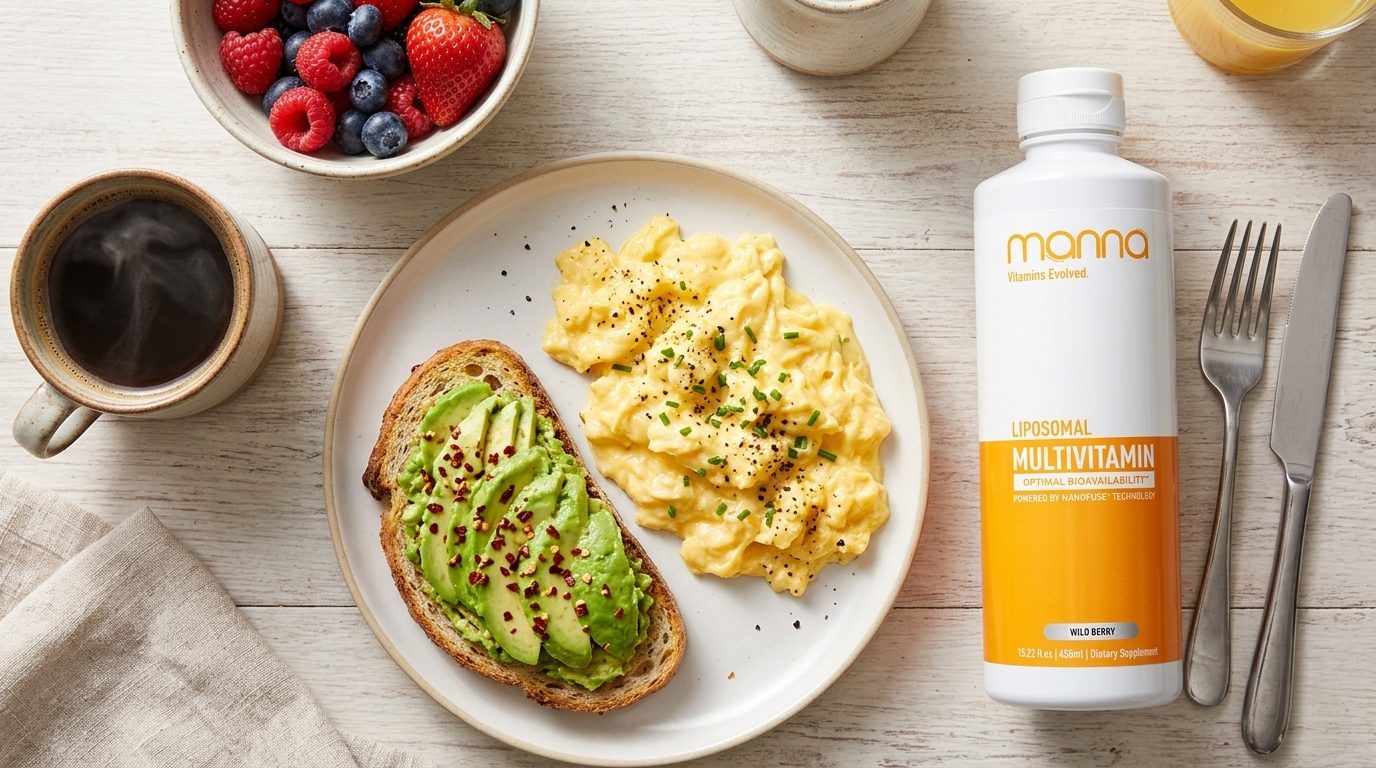
Quick answer: The best time to take a multivitamin is in the morning with a meal that contains some fat—breakfast with eggs, avocado, yogurt, or a drizzle of olive oil works well. Fat-soluble vitamins A, D, E, and K need dietary fat for proper absorption, and taking a multi with food also reduces nausea for most people.
Morning vs Night: What Actually Matters
You've likely heard conflicting advice. Take your multivitamin in the morning for energy. Take it at night so you don't feel sluggish. Take it whenever you'll remember.
Here's what's actually going on: the time of day matters far less than what you take it with. Your body doesn't absorb vitamins differently at 7 a.m. versus 7 p.m. The critical variables are food composition and consistency of timing, not the position of the sun.
That said, most people find morning easier. A morning routine—coffee, breakfast, multivitamin—becomes automatic. You're less likely to forget, and you're probably eating a meal that supports absorption anyway. Evening dosing can work if you eat dinner regularly and at roughly the same time, but breakfast tends to be the more reliable anchor.
The exception: if your multivitamin contains B vitamins in significant amounts and you notice they make you feel alert or interfere with sleep, morning is the better choice. But for most formulations, personal preference and meal timing drive the decision.
Why Fat-Soluble Vitamins Want a Meal (with Some Fat)
Vitamins A, D, E, and K are fat-soluble—they dissolve in fat, not water. That means they rely on the same digestive pathway your body uses to absorb dietary fat.[1]
When you eat fat, your liver releases bile acids into the small intestine. Bile acids emulsify fat—breaking large droplets into smaller ones—so pancreatic enzymes can cleave triglycerides into fatty acids and monoglycerides. These fragments, along with fat-soluble vitamins, are then packaged into micelles—tiny molecular clusters that shuttle them to the intestinal lining for absorption.[3] Without dietary fat in the meal, this machinery doesn't fully engage.
Research on vitamin D illustrates the principle. Studies have shown that taking vitamin D with a meal containing fat significantly improves bioavailability compared to taking it on an empty stomach or with a fat-free meal.[2] The same logic applies to the other fat-soluble vitamins in a multivitamin formula.
How much fat do you need? Not a lot. A teaspoon of olive oil, a handful of nuts, a slice of cheese, or eggs cooked in butter all provide enough to support absorption. You're not trying to mimic a high-fat meal; you're simply giving your digestive system the raw material it needs to do its job.
What about water-soluble vitamins?
The B vitamins and vitamin C are water-soluble—they don't require fat for absorption. You could take them on an empty stomach without compromising bioavailability. But a multivitamin contains both water- and fat-soluble nutrients, so the presence of fat-soluble vitamins dictates the timing. Taking the whole formula with a meal that includes fat ensures you're absorbing everything effectively.
Empty Stomach: Why It Backfires for Many People
Taking a multivitamin on an empty stomach is one of the most common reasons people report nausea, stomach upset, or a metallic aftertaste. Iron, in particular, is notorious for causing nausea when taken without food. Zinc and magnesium can also irritate the gastric lining if there's nothing else in your stomach to buffer them.
Food slows gastric emptying—the rate at which your stomach releases its contents into the small intestine. That slower release gives nutrients time to disperse and dilutes their local concentration, which reduces irritation. It also triggers the secretion of digestive enzymes and bile acids that help break down and absorb the vitamins and minerals in your supplement.
Some people tolerate fasting-state supplementation just fine. But if you've ever felt queasy after swallowing a multivitamin with only water, the fix is simple: take it with breakfast or lunch. Even a small snack—toast with nut butter, a smoothie with avocado, or a hard-boiled egg—makes a meaningful difference.
If nausea persists even with food, it's worth investigating the formulation itself. Some binders, fillers, or high-dose minerals may still cause irritation in sensitive individuals, and switching to a liquid or liposomal format often resolves the issue.
Consistency Beats Perfect Timing
The ideal time to take a multivitamin is the time you'll actually take it. Missing doses or taking them erratically undermines the entire purpose—nutrient levels build gradually over weeks, not hours.
If you're someone who skips breakfast, don't force a morning routine that won't stick. Take your multivitamin with lunch or dinner instead. If you travel frequently and breakfast timing varies, pick the meal that's most consistent across your week. The goal is to create a sustainable habit, not to optimize absorption by five percent at the cost of adherence.
One practical strategy: pair your multivitamin with a daily ritual that's already automatic—morning coffee, brushing your teeth, or packing your work bag. Store the bottle where you'll see it. The less you have to think about it, the more likely you are to stay consistent.
Does splitting the dose help?
Some people prefer to split their multivitamin into two smaller doses—half in the morning, half in the evening. The theoretical advantage is steadier blood levels of water-soluble vitamins, which your body excretes throughout the day. The practical disadvantage is that it's harder to remember two doses than one.
For most people, the consistency gained by taking a single daily dose outweighs any marginal benefit from splitting. If you're taking a therapeutic dose of a specific nutrient under professional guidance, divided dosing may make sense. For a standard multivitamin, once a day with food is sufficient.
How Liquid/Liposomal Formats Change the Timing Math
Liquid and liposomal multivitamins behave differently from tablets or capsules. Liposomal delivery wraps nutrients in phospholipid spheres—tiny bubbles of fat that mimic your cell membranes. These spheres protect the nutrient as it moves through the digestive tract and facilitate absorption directly into cells, bypassing some of the digestive steps that traditional forms require.
Because fat-soluble vitamins in a liposomal format are already encased in a lipid structure, they don't depend as heavily on dietary fat from your meal for absorption. That doesn't mean you should take them on an empty stomach—food still reduces nausea and supports overall digestion—but it does mean the timing becomes more flexible. If you occasionally miss a meal or need to take your multivitamin with a lighter snack, a liposomal formula is more forgiving.
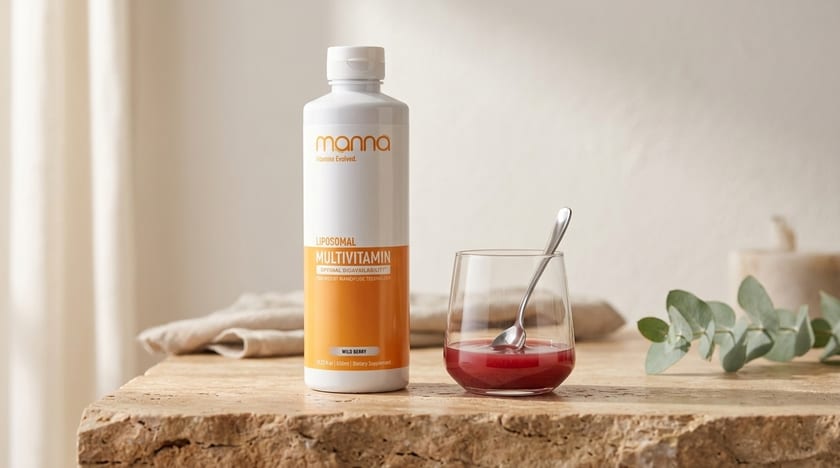
Manna's liposomal multivitamin, for example, uses phospholipid encapsulation to improve bioavailability. You still get the best results when you take it with food, but the formulation is designed to work efficiently even when meal composition or timing isn't perfect.
Liquid formats also tend to cause less stomach upset than large tablets, especially for people with sensitive digestion or difficulty swallowing pills. If nausea has been a barrier to consistent multivitamin use, switching to a liquid or liposomal option—and taking it with food—often resolves the issue.
FAQ + Cautions
Can I take a multivitamin with coffee?
Coffee itself won't harm vitamin absorption, but don't rely on coffee alone—you still need some food with fat. If your morning routine is coffee and toast, add a pat of butter or a smear of almond butter. Coffee on its own is essentially an empty stomach.
Should I avoid taking my multivitamin with certain foods?
Calcium can interfere with iron absorption if both are present in high amounts, but the effect is modest and mainly relevant for therapeutic iron supplementation, not the smaller amounts in most multivitamins. Fiber-rich foods may slightly slow nutrient absorption, but they also slow gastric emptying in a way that reduces nausea. Unless you're managing a specific deficiency under medical supervision, there's no need to avoid particular foods at multivitamin time.
What if I forget to take my multivitamin in the morning?
Take it with your next meal. Don't double up—just resume your normal schedule the following day. Missing one dose won't create a deficiency, and taking two at once increases the risk of nausea and wastes water-soluble vitamins your body will simply excrete.
Can children take multivitamins at the same time as adults?
Yes, the timing principle is the same: with a meal that contains some fat. But children's formulations are dosed differently, and not all adult multivitamins are appropriate for kids. Always choose a product formulated for your child's age group and consult a pediatrician if you're unsure whether supplementation is needed.
Do I need a multivitamin at all?
That depends on your diet, health status, and individual needs. A varied diet rich in whole foods provides most people with adequate nutrition. But gaps are common—restrictive diets, food intolerances, certain health conditions, and life stages (pregnancy, aging) can all increase nutrient needs.[6] If you're uncertain, talk to a healthcare professional about whether a multivitamin makes sense for you.
Can I take other supplements at the same time as my multivitamin?
Generally, yes—but check with a healthcare provider if you're taking high-dose individual nutrients alongside a multivitamin. Some nutrients (like fat-soluble vitamins) can accumulate in the body, and combining a multi with additional standalone supplements may push you above safe upper limits. Water-soluble vitamins carry less risk of toxicity, but more isn't always better.
What if I have a medical condition or take prescription medication?
Consult your doctor before starting a multivitamin. Some nutrients interact with medications—vitamin K with blood thinners, for example—or may be contraindicated in specific conditions. Your healthcare provider can help you choose a formulation and timing that works safely alongside your treatment plan.
These statements have not been evaluated by the Food and Drug Administration. This product is not intended to diagnose, treat, cure, or prevent any disease.
Sources
- Omer E et al. Fat digestion and absorption: Normal physiology and pathophysiology of malabsorption, including diagnostic testing. Nutrition in clinical practice : official publication of the American Society for Parenteral and Enteral Nutrition (2024).
- Borel P et al. Vitamin D bioavailability: state of the art. Critical reviews in food science and nutrition (2015).
- Di Ciaula A et al. Bile Acid Physiology. Annals of hepatology (2017).
- Jeukendrup AE et al. Fat burners: nutrition supplements that increase fat metabolism. Obesity reviews : an official journal of the International Association for the Study of Obesity (2011).
- DiBaise M et al. Hair, Nails, and Skin: Differentiating Cutaneous Manifestations of Micronutrient Deficiency. Nutrition in clinical practice : official publication of the American Society for Parenteral and Enteral Nutrition (2019).
- Cardo A et al. Nutritional Imbalances in Adult Celiac Patients Following a Gluten-Free Diet. Nutrients (2021).
This article is for educational purposes only and is not medical advice. These statements have not been evaluated by the Food and Drug Administration. Manna products are not intended to diagnose, treat, cure, or prevent any disease. Consult your healthcare provider before starting any new supplement, especially if you are pregnant, nursing, taking medication, or managing a medical condition.
Frequently asked questions
Wellness that actually works
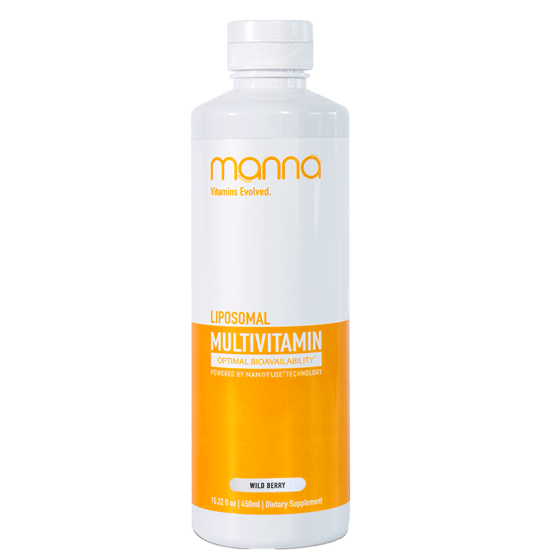
Liposomal Multivitamin
10x better absorption than traditional vitamins. The daily foundation.
Explore Manna's clinically-informed liposomal supplements.
Keep reading


Feel the difference absorption makes.
Start today, backed by our 90-day money-back guarantee. Free U.S. shipping on every subscription.