
How to Choose a Turmeric Supplement: What Actually Matters
By The Manna Editorial Team · August 10, 2026
10 min read

Evidence-based. This article was written and fact-checked by the Manna Editorial Team against the peer-reviewed research cited throughout.
Quick answer: The best turmeric supplement is defined by its absorption technology (liposomal or phytosome formulations typically outperform raw turmeric with black pepper), standardized curcuminoid content (95% is the research standard), and third-party testing for purity—not by the milligram count on the label.
Why Most Turmeric Supplements Underdeliver
You've probably seen turmeric supplements lining entire shelves at the pharmacy, each promising inflammation support and antioxidant benefits. The problem isn't that turmeric lacks potential—it's that most of what you swallow never makes it into your bloodstream.
Curcumin, the active compound responsible for turmeric's studied effects, has notoriously poor bioavailability. Research consistently shows that when you take standard curcumin powder, very little is absorbed; most is rapidly metabolized and eliminated before it can reach your tissues.[2] The scientific term is "low oral bioavailability," and it's the single biggest obstacle between taking a turmeric capsule and experiencing any measurable benefit.
This bioavailability problem is well-established in the literature. Studies have documented rapid metabolism in the gut and liver, poor solubility in water, and quick elimination from the body—all of which contribute to minimal systemic exposure even at high doses.[3] Understanding this helps explain why the supplement you choose matters far more than the dose printed on the label.
Standardized to 95% Curcuminoids vs. Turmeric Root Powder
When you're reading labels, the first distinction to understand is the difference between whole turmeric root powder and standardized curcumin extract.
Turmeric root powder is the entire ground rhizome—the same thing you might buy as a cooking spice. It contains roughly 2–5% curcuminoids by weight, along with fiber, starches, and other plant compounds. A 500 mg turmeric powder capsule delivers perhaps 10–25 mg of actual curcuminoids.
Standardized curcumin extract, by contrast, is concentrated to deliver a specific percentage of curcuminoids—typically 95%. That same 500 mg dose, if it's a 95% extract, provides 475 mg of curcuminoids. Nearly all clinical research on turmeric's health effects has used these standardized extracts, not whole root powder.[1]
Label red flags:
- "Turmeric root" or "turmeric powder" without any mention of curcuminoid standardization—you're getting mostly filler
- Vague language like "turmeric complex" that doesn't specify extract percentage
- A proprietary blend that hides the actual curcumin dose behind other ingredients
- Unrealistically high milligram claims (e.g., "5,000 mg turmeric!") that turn out to be whole root powder with minimal active content
Look for clear language: "Curcumin extract standardized to 95% curcuminoids" or equivalent phrasing that tells you exactly what you're getting.
The Absorption Hierarchy: How Delivery Form Changes Everything
Even a high-quality 95% curcumin extract won't help if it can't cross from your gut into your bloodstream. This is where delivery technology becomes the determining factor in whether you're buying an effective supplement or expensive urine.
Four main approaches have emerged, each with different absorption profiles:
Raw Curcumin
Standard curcumin powder in a capsule. Baseline bioavailability is extremely low—most is never absorbed.[2] This is the least effective option and generally not worth purchasing unless cost is the only consideration.
Curcumin + Black Pepper Extract (Piperine)
Piperine—an alkaloid from black pepper—inhibits certain drug-metabolizing enzymes in the liver and gut, which slows curcumin breakdown and increases absorption. Studies have documented meaningful improvements in bioavailability with this combination. It's inexpensive to manufacture and remains the most common approach in budget and mid-tier supplements.
The trade-off: piperine's mechanism is enzyme inhibition, which can interfere with prescription medications metabolized by the same pathways (more on this below). Not everyone can safely take black pepper extract.
Phytosome / Phospholipid Complexes
These formulations bind curcumin to phospholipids—fats that help the compound dissolve and pass through cell membranes. Research suggests phytosome technology can significantly improve absorption compared to standard curcumin, even without piperine.[4] This approach avoids the drug-interaction risks of black pepper while delivering better bioavailability than raw curcumin.
Liposomal Curcumin
Liposomal delivery encapsulates curcumin inside phospholipid vesicles that mimic the body's own cell membranes. This protects the curcumin during digestion and facilitates absorption directly into the bloodstream. Studies on liposomal curcumin and related nanoformulations have documented enhanced bioavailability and tissue delivery compared to conventional forms.[5][6] It's typically the most expensive technology but offers the absorption advantage without requiring enzyme inhibition.
| Form | Typical Absorption vs. Raw | Needs Black Pepper? | Best For | Watch-Outs |
|---|---|---|---|---|
| Raw curcumin powder | Baseline (very low) | No (but doesn't help much) | Budget-conscious; minimal expectations | Likely ineffective at typical doses |
| Curcumin + piperine | Improved | Yes (that's the mechanism) | Cost-effectiveness if no drug interactions | CYP3A4 inhibition; drug interactions; GI sensitivity |
| Phytosome | Significantly improved | No | Better absorption without enzyme interference | Higher cost than piperine formulas |
| Liposomal | Highest documented | No | Maximum bioavailability; taking other medications | Premium price point |
Who Should Avoid Black Pepper Extract
Piperine works by inhibiting CYP3A4 and other cytochrome P450 enzymes—proteins in your liver and intestines responsible for breaking down a wide range of drugs and compounds. When you slow these enzymes, you don't just increase curcumin absorption; you potentially increase blood levels of any medication metabolized by the same pathway.
This isn't theoretical. CYP3A4 is involved in the metabolism of many common prescription drugs, including certain blood thinners, blood pressure medications, immunosuppressants, and chemotherapy agents. If you're taking any prescription medication, black pepper extract can alter how your body processes that drug—sometimes significantly.
You should avoid piperine-based turmeric supplements if you:
- Take any prescription medication (discuss with your doctor first—enzyme inhibition is a real interaction risk)
- Experience digestive upset or heartburn from black pepper
- Are pregnant or breastfeeding (safety data on piperine supplementation in these populations is limited)
- Have a condition requiring tightly controlled drug levels (e.g., organ transplant recipients on immunosuppressants)
For these individuals, a phytosome or liposomal formulation offers a way to improve curcumin absorption without enzyme inhibition. We've written a detailed guide on choosing curcumin supplements without black pepper for anyone navigating this constraint.
The Four Criteria That Actually Matter
When evaluating a turmeric supplement, focus on these four factors:
1. Absorption Technology
As outlined above, delivery form determines bioavailability. Prioritize liposomal or phytosome formulations if budget allows; at minimum, confirm the product includes a documented absorption enhancer and understand the trade-offs.
2. Curcuminoid Standardization
The label should specify "standardized to 95% curcuminoids" or provide an equivalent quantified statement. Avoid products that list only turmeric root powder or use vague terminology. You want to know exactly how much active compound you're getting per dose.
3. Third-Party Testing
Look for verification from an independent lab (common certifiers include USP, NSF, or ConsumerLab). Third-party testing confirms the product contains what the label claims and is free from contaminants like heavy metals, pesticides, and microbial contamination. This is especially important for turmeric, which is often grown in regions with variable agricultural standards.
4. Transparent Sourcing and Manufacturing
A reputable brand will disclose where its curcumin is sourced and where the product is manufactured. U.S.-based manufacturing under GMP (Good Manufacturing Practice) standards is a reliable indicator of quality control. Be wary of brands that provide no information about their supply chain.
Label-Reading Checklist
- ✓ "Curcumin extract standardized to 95% curcuminoids" (or equivalent clear standardization)
- ✓ Specific absorption technology named (liposomal, phytosome, or piperine—with understanding of the latter's limitations)
- ✓ Third-party testing seal or certificate of analysis available
- ✓ Clear dosing instructions (mg of actual curcuminoids per serving)
- ✓ Sourcing and manufacturing location disclosed
- ✗ "Proprietary blend" that hides ingredient amounts
- ✗ Exaggerated claims ("cures inflammation," "prevents disease"—legally and scientifically unsupportable)
- ✗ Turmeric root powder without standardized extract
What the Research Actually Supports
It's important to be clear about what clinical evidence does and does not establish regarding curcumin supplementation.
Research has explored curcumin's potential to support a healthy inflammatory response, act as an antioxidant, and contribute to joint comfort, cardiovascular wellness, and cognitive function.[1] These structure-function effects—how curcumin interacts with normal biological processes—are documented across numerous studies.
What the evidence does not support: claims that curcumin or turmeric supplements diagnose, treat, cure, or prevent any disease. The distinction is critical. Curcumin may help maintain healthy inflammatory pathways, but it is not a treatment for arthritis. It may support antioxidant defenses, but it does not cure oxidative stress-related conditions. Despite significant research interest, curcumin remains a dietary supplement, not a pharmaceutical intervention.
The quality of evidence also varies. Some effects are supported by randomized controlled trials in humans; others rest primarily on animal models or in vitro (test tube) studies. Bioavailability matters here, too—many older studies used doses or formulations that likely resulted in minimal systemic exposure, complicating interpretation.
For a deeper review of what turmeric supplementation may and may not offer, see our evidence-based guide to turmeric's health effects and our curcumin science page.
Safety and Interactions
Curcumin is generally well-tolerated at typical supplemental doses. Most people experience no side effects. When adverse events occur, they tend to be mild and gastrointestinal—nausea, diarrhea, or stomach upset—particularly at higher doses.
However, turmeric and curcumin supplements are not appropriate for everyone:
- Drug interactions: Beyond the piperine issue discussed earlier, curcumin itself may interact with anticoagulants (blood thinners) and antiplatelet drugs due to its effects on clotting pathways. If you take warfarin, aspirin, clopidogrel, or similar medications, consult your healthcare provider before supplementing.
- Gallbladder issues: Turmeric can stimulate bile production. Individuals with gallstones or bile duct obstruction should avoid turmeric supplements.
- Surgery: Because of potential effects on clotting, it's generally recommended to stop curcumin supplements at least two weeks before scheduled surgery.
- Pregnancy and breastfeeding: While culinary amounts of turmeric are considered safe, there is insufficient data on the safety of concentrated curcumin supplements during pregnancy and lactation.
If you have a medical condition or take prescription medications, discuss curcumin supplementation with your healthcare provider. This is not overcaution—it's appropriate due diligence given documented interaction pathways.
Where Manna Liposomal Curcumin Fits
We designed our curcumin products specifically to address the bioavailability and safety issues discussed in this guide.
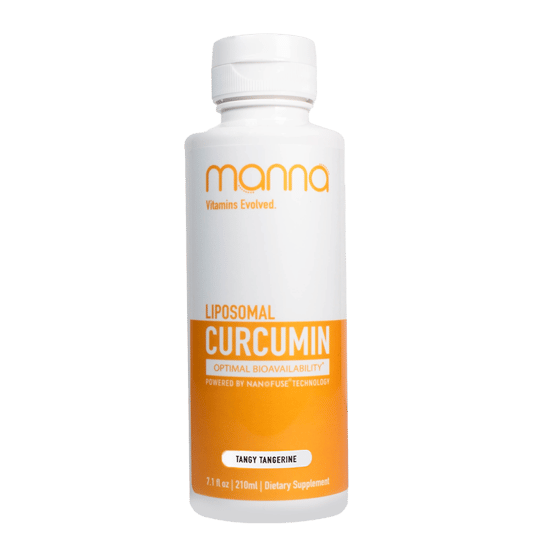
Manna Liposomal Curcumin delivers 500 mg of curcumin (standardized to 95% curcuminoids) per serving, encapsulated in phospholipid liposomes for enhanced absorption. The liposomal technology means you get the bioavailability advantage without black pepper extract—no CYP3A4 inhibition, no piperine-related drug interactions. It's third-party tested for purity and manufactured in a U.S.-based GMP-certified facility.
For those looking for additional support, Manna Liposomal Curcumin+ combines the same liposomal curcumin base with ginger extract and boswellia—both traditionally used to support joint comfort and a healthy inflammatory response. The formulation is designed for individuals seeking a more comprehensive approach to these common wellness goals, still without enzyme inhibitors or unnecessary fillers.
We're transparent about what these products are: dietary supplements designed to support normal structure and function, not medications. They will not treat or cure any disease. What they offer is research-informed delivery technology, standardized active ingredients, and manufacturing integrity—the criteria we believe actually matter when choosing a turmeric supplement.
Frequently Asked Questions
What is the best turmeric supplement to take?
The best turmeric supplement is one that delivers bioavailable curcumin (via liposomal, phytosome, or—if you can safely take it—piperine technology), uses a 95% standardized curcumin extract, and is third-party tested for purity. The "best" choice depends on your budget, whether you take other medications, and your tolerance for black pepper extract.
Is turmeric or curcumin better to take?
Curcumin is the active compound responsible for most of turmeric's studied health effects. Whole turmeric root powder contains only 2–5% curcuminoids, whereas standardized curcumin extracts deliver concentrated active content. For supplementation, a standardized curcumin extract is more effective than turmeric powder.
Do I need black pepper with turmeric?
Black pepper extract (piperine) improves curcumin absorption by inhibiting liver enzymes, but it's not the only option. Liposomal and phytosome formulations enhance bioavailability without piperine, which is important if you take medications or have GI sensitivity to black pepper. You do not need piperine if you choose an advanced delivery technology.
How much curcumin should I take daily?
Typical doses in research range from 500 mg to 2,000 mg of curcumin per day, depending on the formulation and intended use. Bioavailability matters more than dose—500 mg of liposomal curcumin delivers far more systemic exposure than 2,000 mg of raw curcumin powder. Follow the dosing instructions for your specific product and consult a healthcare provider for personalized guidance.
Can I take turmeric curcumin every day?
Yes, curcumin is generally considered safe for daily, long-term use at typical supplemental doses. Most clinical trials have used daily dosing for weeks to months without significant adverse effects. However, if you have a medical condition or take prescription medications, check with your healthcare provider.
What should I look for on a turmeric supplement label?
Look for: (1) "curcumin extract standardized to 95% curcuminoids," (2) a named absorption technology (liposomal, phytosome, or piperine), (3) third-party testing certification, and (4) transparent sourcing/manufacturing information. Avoid proprietary blends, vague "turmeric complex" labels, and products that list only turmeric root powder.
Are there any side effects of taking curcumin?
Curcumin is well-tolerated by most people. Mild gastrointestinal upset (nausea, diarrhea) can occur at high doses. Curcumin may interact with blood-thinning medications and should be avoided by individuals with gallbladder issues. Piperine-based formulas can alter drug metabolism. Consult your healthcare provider if you have concerns or take medications.
Is liposomal curcumin better than regular curcumin?
Yes, in terms of bioavailability. Liposomal curcumin encapsulates the active compound in phospholipid vesicles, which protect it during digestion and facilitate absorption into the bloodstream. Studies on liposomal and nanoformulated curcumin have documented significantly higher bioavailability compared to standard curcumin powder.[5] This means more of the curcumin you take actually reaches your tissues.
These statements have not been evaluated by the Food and Drug Administration. This product is not intended to diagnose, treat, cure, or prevent any disease.
Sources
- El-Saadony MT et al. Curcumin, an active component of turmeric: biological activities, nutritional aspects, immunological, bioavailability, and human health benefits - a comprehensive review. Frontiers in immunology (2025).
- Tabanelli R et al. Improving Curcumin Bioavailability: Current Strategies and Future Perspectives. Pharmaceutics (2021).
- Sohn SI et al. Biomedical Applications and Bioavailability of Curcumin-An Updated Overview. Pharmaceutics (2021).
- Urošević M et al. Curcumin: Biological Activities and Modern Pharmaceutical Forms. Antibiotics (Basel, Switzerland) (2022).
- Ataei M et al. Recent advances in curcumin-based nanoformulations in diabetes. Journal of drug targeting (2023).
- Lu KH et al. Curcumin and its Analogs and Carriers: Potential Therapeutic Strategies for Human Osteosarcoma. International journal of biological sciences (2023).
This article is for educational purposes only and is not medical advice. These statements have not been evaluated by the Food and Drug Administration. Manna products are not intended to diagnose, treat, cure, or prevent any disease. Consult your healthcare provider before starting any new supplement, especially if you are pregnant, nursing, taking medication, or managing a medical condition.
Frequently asked questions
Wellness that actually works
Liposomal Curcumin
The original. Supports natural comfort and a healthy inflammatory response.
Explore Manna's clinically-informed liposomal supplements.
Keep reading

Feel the difference absorption makes.
Start today, backed by our 90-day money-back guarantee. Free U.S. shipping on every subscription.