
Curcumin Without Black Pepper: How to Get High Absorption Without Piperine
By The Manna Editorial Team · August 10, 2026
7 min read
Evidence-based. This article was written and fact-checked by the Manna Editorial Team against the peer-reviewed research cited throughout.
Quick answer: Yes — you can achieve high curcumin absorption without black pepper by choosing liposomal or phospholipid-bound curcumin formulations, or by taking standard curcumin with dietary fat. These delivery methods bypass the need for piperine entirely.
Why Black Pepper Is Added to Curcumin in the First Place
If you've ever read the ingredient label on a turmeric supplement, you've probably noticed black pepper extract listed near the bottom. That's piperine — the alkaloid compound that gives black pepper its bite — and it's there for a single, well-documented reason: it dramatically slows the breakdown of curcumin in your liver and gut wall.[2]
Curcumin, the active compound in turmeric, is notoriously difficult to absorb. When you swallow standard curcumin, your body metabolizes most of it before it ever reaches circulation. Piperine inhibits certain enzymes in your intestine and liver — primarily glucuronidation pathways — allowing more curcumin to enter your bloodstream intact.[4] The effect is large enough that many supplement manufacturers default to a curcumin-piperine combination.
But slowing enzyme activity isn't a free lunch. The same mechanism that boosts curcumin levels can interfere with how your body processes other compounds — including prescription medications.
Legitimate Reasons to Avoid Piperine
Drug Interactions via CYP3A4 Inhibition
Piperine inhibits cytochrome P450 3A4 (CYP3A4), a liver enzyme responsible for metabolizing roughly half of all prescription drugs.[2] When CYP3A4 is slowed, blood levels of certain medications can rise — sometimes unpredictably. That includes statins, calcium channel blockers, immunosuppressants, benzodiazepines, and a range of antidepressants and antihistamines.
If you take any prescription medication chronically, adding piperine to your routine introduces a variable your prescriber likely hasn't accounted for. It's a real interaction, not a theoretical one, and it's one reason clinical protocols for curcumin research increasingly avoid formulations that rely on black pepper.[3]
Gastrointestinal Sensitivity
Piperine is an irritant by design. It activates TRPV1 receptors — the same heat-sensing channels triggered by capsaicin — which is why black pepper feels sharp on the tongue. For some people, that same irritation shows up as heartburn, stomach discomfort, or worsened symptoms if they have gastritis, ulcers, or inflammatory bowel conditions.
If you already experience digestive sensitivity with spicy foods, there's a decent chance piperine will cause similar trouble, even in the small doses found in supplements.
Personal Preference and Simplicity
You might simply prefer a supplement regimen that doesn't introduce an additional bioactive compound. Simplicity has its own value — fewer ingredients means fewer variables, less risk of intolerance, and a cleaner decision tree when stacking multiple supplements.
How to Absorb Curcumin Without Black Pepper
Here's what's actually going on: absorption isn't a single problem with a single solution. Several delivery strategies reliably increase curcumin bioavailability without touching piperine.
Liposomal Curcumin
Liposomal formulations wrap curcumin molecules in phospholipid bubbles — microscopic spheres made from the same material as your cell membranes. This allows curcumin to pass directly through intestinal cells and into circulation without relying on standard digestive absorption. The phospholipid coating also protects curcumin from early metabolism, achieving high blood levels without enzyme inhibition.[3]
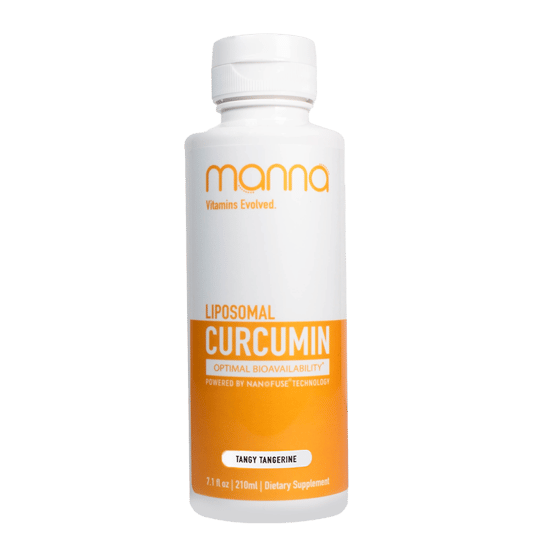
Liposomal delivery is the cleanest workaround for anyone avoiding piperine due to drug interactions or GI sensitivity. It's also why Manna's curcumin formula uses liposomal encapsulation as its core technology.
Phospholipid-Bound Curcumin (Phytosome)
Phytosome technology binds curcumin directly to phosphatidylcholine, a fat-soluble compound derived from lecithin. This creates a curcumin-phospholipid complex that behaves like a natural food component, enhancing absorption through the lymphatic system rather than the bloodstream alone. Like liposomal curcumin, phytosome formulations achieve strong bioavailability without black pepper.
Taking Standard Curcumin with Dietary Fat
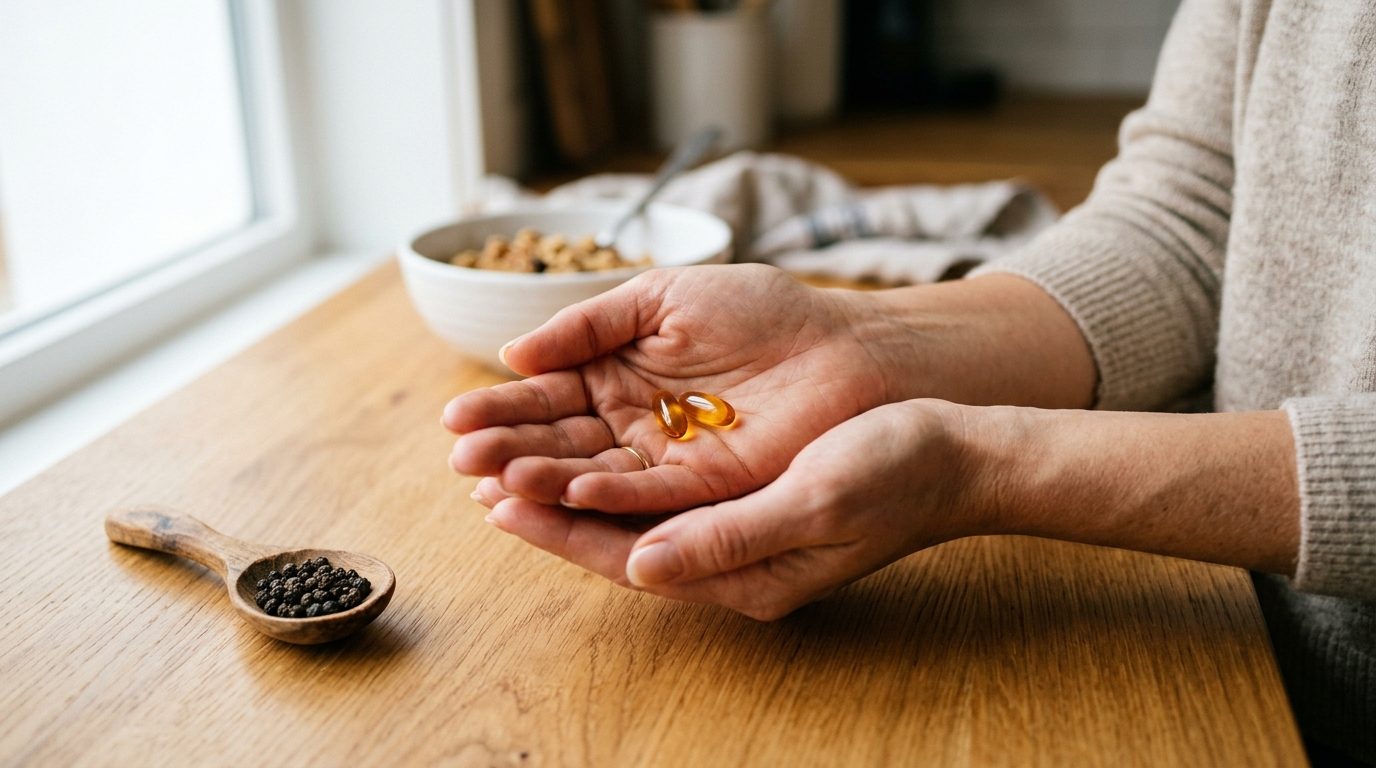
Curcumin is fat-soluble, which means it dissolves in and travels with lipids. If you take a standard curcumin supplement with a meal that contains fat — olive oil, avocado, nuts, fatty fish — you'll improve absorption modestly. This won't match the boost from piperine or liposomal delivery, but it's a straightforward, no-additive option if you already have curcumin on hand and want to get more out of it.
The effect is real but limited. Don't expect blood levels comparable to engineered delivery systems.
What to Look for on a Supplement Label
If you're shopping for curcumin without black pepper, the ingredient list should make the absorption strategy obvious. Look for these markers:
- Liposomal curcumin or phospholipid complex listed as the primary form
- No piperine, black pepper extract, or BioPerine® (a trademarked piperine ingredient)
- Phosphatidylcholine or sunflower lecithin as structural ingredients (common in liposomal and phytosome products)
- Dosage transparency: the label should state milligrams of actual curcuminoids, not just turmeric root powder
Red Flags
- "Proprietary blend" without individual ingredient amounts — you can't verify what you're getting
- Turmeric root powder with no mention of curcumin content — whole turmeric contains only 2–5% curcuminoids, so absorption is negligible without enhancement
- Vague absorption claims like "enhanced bioavailability" with no explanation of how
- Unlisted piperine — some products include black pepper under "natural flavors" or don't disclose it at all; if the product advertises "boosted absorption" but doesn't specify the method, piperine is a likely candidate
For a deeper breakdown of what separates effective formulations from marketing, see our guide to choosing the best curcumin supplement.
Safety and When to Talk to Your Doctor
Curcumin is well-tolerated at typical supplement doses, and formulations without piperine remove the most common source of drug interactions. That said, curcumin itself can influence certain pathways — it has mild antiplatelet activity and may interact with blood thinners like warfarin or antiplatelet drugs. If you take any medication chronically, or if you have a scheduled surgery, consult your healthcare provider before starting curcumin in any form.
Liposomal and phytosome curcumin are generally gentler on the stomach than standard curcumin or piperine-enhanced products, but individual tolerance varies. Start with the lowest effective dose and increase gradually if needed.
Pregnant or breastfeeding individuals should discuss curcumin supplementation with their doctor. The evidence on safety in these populations is limited, and high-dose curcumin hasn't been studied extensively in pregnancy.
Frequently Asked Questions
Is curcumin without black pepper as effective?
Yes — if you choose a high absorption curcumin without black pepper like liposomal or phytosome formulations. These achieve bioavailability equal to or greater than piperine-enhanced products, but through a completely different mechanism that doesn't inhibit drug-metabolizing enzymes.
Can I just take turmeric without piperine?
You can, but absorption will be minimal. Whole turmeric root contains only small amounts of curcumin, and without an absorption enhancer — whether piperine, fat, or engineered delivery — very little reaches your bloodstream. If you're using turmeric as a culinary spice in food that contains fat, you'll get modest benefit. As a supplement, plain turmeric powder is unlikely to produce noticeable effects.
For more context on how turmeric and black pepper work together (and when that pairing makes sense), read our explainer on turmeric and black pepper.
How much curcumin should I take if I'm avoiding piperine?
Effective doses depend on the formulation. Liposomal curcumin typically works at 200–500 mg of curcuminoids per day, while phytosome products often recommend 500–1,000 mg. Standard curcumin without enhancement may require higher doses — 1,500 mg or more — but even then, absorption remains low. Follow the dosage guidance on your specific product and adjust based on your healthcare provider's recommendations.
Are there side effects to liposomal curcumin?
Liposomal curcumin is generally well-tolerated. Some people report mild nausea or loose stools at higher doses, but these effects are less common than with standard curcumin or piperine-containing formulas. Because liposomal delivery bypasses some of the digestive irritation associated with poorly absorbed curcumin, GI side effects tend to be minimal.
A Practical Solution: Manna Liposomal Curcumin
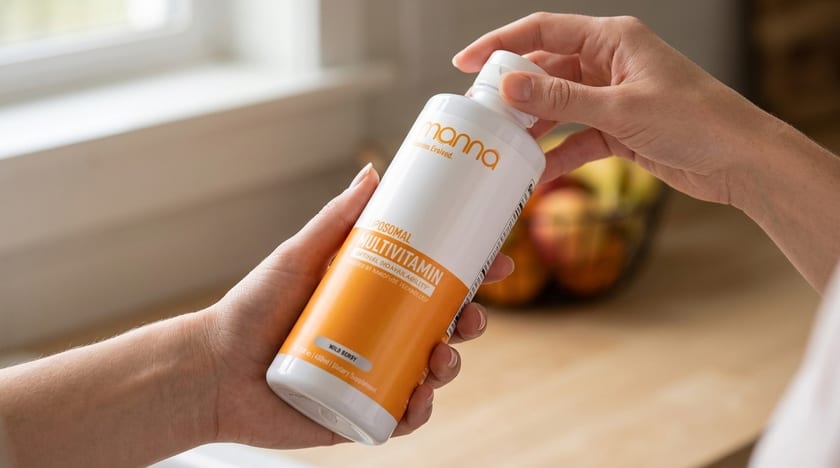
If you're looking for best curcumin without black pepper, liposomal delivery is the most direct answer. Manna Liposomal Curcumin uses phospholipid encapsulation to achieve high absorption without piperine, fillers, or unnecessary additives. It's formulated for people who need effective curcumin but can't — or prefer not to — rely on black pepper extract.
That means no CYP3A4 inhibition, no GI irritation from piperine, and no guesswork about drug interactions. Just curcumin in a delivery system your body can actually use.
As always, consult your healthcare provider before starting any new supplement — especially if you take prescription medications or have an underlying health condition. Curcumin supports a healthy inflammatory response and joint comfort, but your doctor is the best source of guidance for your individual situation.
These statements have not been evaluated by the Food and Drug Administration. This product is not intended to diagnose, treat, cure, or prevent any disease.
Sources
- Liu X et al. Plant-based bioactives and oxidative stress in reproduction: anti-inflammatory and metabolic protection mechanisms. Frontiers in nutrition (2025).
- Dudhatra GB et al. A comprehensive review on pharmacotherapeutics of herbal bioenhancers. TheScientificWorldJournal (2012).
- Yakubu J et al. Clinical hurdles for curcumin and piperine nanoparticles in prostate cancer treatment: a bridge too far or a path to clinical reality?. Expert opinion on drug delivery (2026).
- Gidwani B et al. Herbal Bioenhancers in Pharmaceutical Drug Delivery: Mechanisms, Challenges, and Future Innovations. Chemistry & biodiversity (2025).
This article is for educational purposes only and is not medical advice. These statements have not been evaluated by the Food and Drug Administration. Manna products are not intended to diagnose, treat, cure, or prevent any disease. Consult your healthcare provider before starting any new supplement, especially if you are pregnant, nursing, taking medication, or managing a medical condition.
Frequently asked questions
Wellness that actually works
Liposomal Curcumin
The original. Supports natural comfort and a healthy inflammatory response.
Explore Manna's clinically-informed liposomal supplements.
Keep reading
Feel the difference absorption makes.
Start today, backed by our 90-day money-back guarantee. Free U.S. shipping on every subscription.