
Liposomal vs. Regular Vitamin C: Does It Absorb Better?
By Manna Editorial Team · August 11, 2026
1 min readLast reviewed August 11, 2026

Vitamin C is water-soluble, which is exactly why it is tricky to absorb in large amounts. Your gut uses specific transporters to take it up, and those transporters saturate — so as you swallow more plain vitamin C, the percentage your body actually absorbs goes down, and the excess is excreted.
The problem with regular vitamin C at high doses
At small doses, standard vitamin C (ascorbic acid) is absorbed efficiently. But push the dose up to gram-level amounts and absorption efficiency drops sharply — and unabsorbed vitamin C can cause digestive upset for some people.
How liposomal vitamin C is different
Liposomal vitamin C encapsulates ascorbic acid inside a phospholipid sphere similar to your own cell membranes. This is designed to protect the vitamin through digestion and help it cross the gut lining through a different route than saturable transporters alone — supporting higher, steadier absorption and often better stomach tolerance. See the full mechanism on our liposomal delivery page.
Why absorption matters here
Vitamin C supports immune function, is a required cofactor for your body's own collagen synthesis (skin, blood vessels, connective tissue), and works as an antioxidant. Getting more of each dose into your bloodstream means more of the vitamin is available for these jobs.
The bottom line
If you take higher doses of vitamin C for immune or skin support, delivery format matters. A liposomal vitamin C is designed to sidestep the drop-off in absorption that plagues large doses of plain ascorbic acid — and tends to be gentler on the stomach in the process.
- Regular, low doseHigh %
- Regular, high doseLower %
- LiposomalDesigned high %
Illustrative: standard vitamin C absorption efficiency declines at higher doses, while liposomal delivery is designed to sustain uptake. Based on published bioavailability research, not a single head-to-head trial.
References
- 01NIH Office of Dietary Supplements — Vitamin C Fact Sheet for Health Professionals — Dose-dependent absorption of vitamin C and its physiological roles.
- 02Educational only; not medical advice. Consult your healthcare provider before starting a new supplement.
This article is for educational purposes only and is not medical advice. These statements have not been evaluated by the Food and Drug Administration. Manna products are not intended to diagnose, treat, cure, or prevent any disease. Consult your healthcare provider before starting any new supplement, especially if you are pregnant, nursing, taking medication, or managing a medical condition.
Frequently asked questions
Wellness that actually works
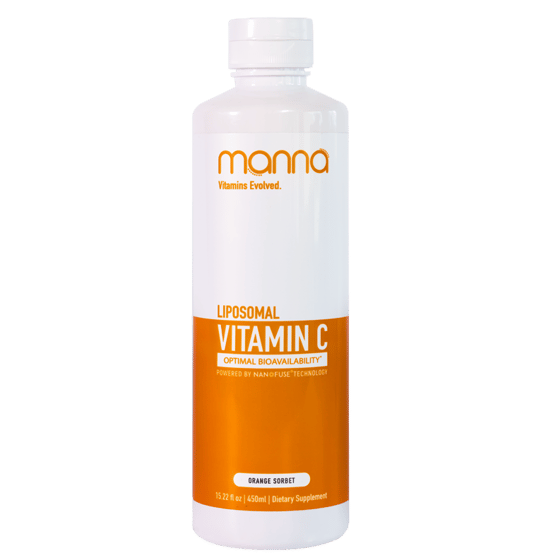
Liposomal Vitamin C
Super-C immune support
Explore Manna's clinically-informed liposomal supplements.
Keep reading


Feel the difference absorption makes.
Start today, backed by our 90-day money-back guarantee. Free U.S. shipping on every subscription.