
Curcumin Phytosome vs. Liposomal Curcumin: Which Absorbs Better?
By The Manna Editorial Team · August 10, 2026
7 min read
Evidence-based. This article was written and fact-checked by the Manna Editorial Team against the peer-reviewed research cited throughout.
Quick answer: Both curcumin phytosome (Meriva) and liposomal curcumin solve the same core problem—poor absorption of plain curcumin—but use different mechanisms. Phytosome binds curcumin to phospholipid molecules, while liposomal wraps curcumin inside phospholipid spheres for protection during digestion.
You've probably seen turmeric supplements touting "29x better absorption" or "advanced phytosome technology." The marketing is loud because the underlying problem is real: curcumin—the active compound in turmeric—breaks down quickly in your digestive tract and absorbs poorly on its own.[1] That's why supplement makers have developed delivery systems to overcome curcumin's notoriously low bioavailability.
Two technologies dominate the premium end of the market: curcumin phytosome (often branded as Meriva) and liposomal curcumin. Both work—they just take different routes to the same destination. Here's what's actually going on, how they compare, and which might make sense for your goals.
What Curcumin Phytosome (Meriva) Is
Curcumin phytosome is a proprietary complex that binds curcumin molecules to phosphatidylcholine—a phospholipid derived from soy or sunflower lecithin. The term "phytosome" itself means "plant cell," and the technology was developed by the Italian company Indena in the 1980s for botanical extracts.
In this formulation, curcumin chemically attaches to the phospholipid in roughly a 1:1 or 1:2 ratio, creating a new molecular complex. The phospholipid acts as a carrier, making curcumin more compatible with both the fatty environment of cell membranes and the watery environment of your bloodstream.[3] Think of it as binding curcumin to a molecule that your body already knows how to absorb.
Meriva is the most widely studied curcumin phytosome and contains a standardized extract of curcumin (typically 18-22%) complexed with phosphatidylcholine. It's found in supplements from Thorne, Life Extension, and other brands that position themselves on clinical research rather than hype.
The phytosome approach does not require black pepper extract (piperine) to enhance absorption, which matters if you're sensitive to piperine or taking medications that interact with it—piperine inhibits certain liver enzymes and can affect drug metabolism.[2]
What Liposomal Curcumin Is
Liposomal curcumin takes a different structural approach. Instead of binding curcumin to a phospholipid, liposomal delivery encapsulates curcumin inside tiny spheres—liposomes—made from a double layer of phospholipids. These spheres mimic the structure of your own cell membranes.
The curcumin sits inside the liposome's core, protected from stomach acid and digestive enzymes as it travels through your GI tract. Because the outer shell is made of the same phospholipids that make up cell membranes, liposomes can merge directly with intestinal cells, releasing their contents inside or passing intact into the lymphatic system.[4]
This is fundamentally different from phytosome. A liposome is a transport vehicle—a protective bubble. Phytosome is a chemical complex. Both use phospholipids, but the relationship between the phospholipid and the active compound is structurally distinct.
Liposomal formulations typically deliver curcumin in liquid or soft-gel form, though some powdered versions exist. Quality matters significantly here; poorly manufactured liposomes can rupture before they reach your intestines, negating the bioavailability advantage. You can read more about how liposomal encapsulation works if you want the detailed mechanism.
Curcumin Phytosome vs Liposomal: Head-to-Head Comparison
| Factor | Phytosome (Meriva) | Liposomal |
|---|---|---|
| Mechanism | Curcumin chemically bound to phosphatidylcholine | Curcumin encapsulated inside phospholipid spheres |
| Absorption approach | Phospholipid carrier enhances membrane compatibility | Protective sphere bypasses digestive breakdown, merges with cells |
| Typical form | Capsule, tablet | Liquid, soft-gel, some powders |
| Requires black pepper (piperine)? | No | No |
| Vegan options | Yes (sunflower lecithin versions) | Yes (sunflower or non-soy lecithin) |
| Best for | Established clinical research; those wanting tablet/capsule form | Maximum bioavailability potential; those comfortable with liquid/gel |
Which to Choose Based on Your Goal
If you prioritize a supplement with peer-reviewed human studies specifically on that formulation, curcumin phytosome—particularly Meriva—has the edge. Researchers have used Meriva in clinical trials examining its effects on inflammatory markers, joint comfort, and recovery, which means you're taking the exact formulation that was studied.[1]
If you want the theoretical ceiling for absorption and don't mind a liquid or soft-gel format, liposomal curcumin offers a compelling case. The encapsulation mechanism protects curcumin through the hostile environment of the stomach and delivers it in a form that can bypass traditional intestinal absorption pathways. For some people, this results in noticeably faster effects, though individual variation is significant.
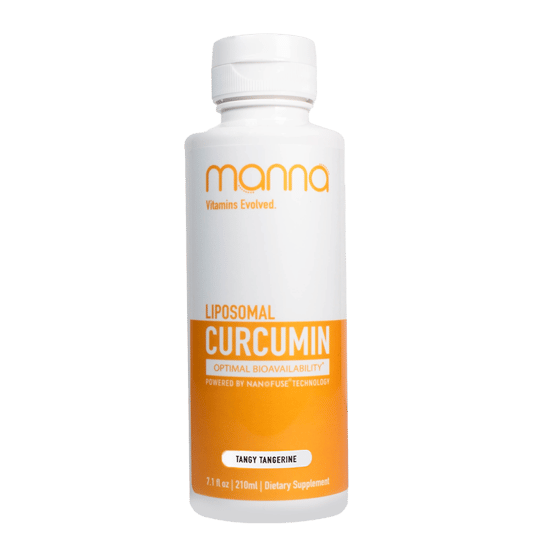
Practical considerations matter, too. Phytosome capsules are shelf-stable, portable, and tasteless. Liposomal liquids may have a distinct flavor (curcumin is earthy and slightly bitter), require refrigeration after opening, and are less convenient for travel. Manna's liposomal curcumin addresses some of these issues with careful formulation, but the format inherently differs from a dry capsule.
If you're sensitive to piperine or taking medications metabolized by CYP3A4 enzymes (a large category including many statins, blood thinners, and immunosuppressants), both phytosome and liposomal let you avoid black pepper extract entirely—an advantage over standard curcumin-piperine combinations.[2]
The Honest Reality About Absorption Claims
Both technologies improve curcumin absorption compared to unformulated curcumin powder. The exact magnitude—those "29x" or "46x" figures you see—comes from pharmacokinetic studies measuring blood levels of curcumin metabolites after a single dose. These numbers are real but context-dependent.
First, they're measured against a baseline of plain curcumin, which absorbs so poorly that almost any enhancement looks dramatic. Second, these studies typically measure total curcuminoids in plasma, including metabolites, and the analytical methods vary between studies, making direct cross-technology comparisons difficult.[6]
Third—and this is important—higher blood levels don't automatically translate to greater physiological effects. Curcumin and its metabolites work through multiple pathways, and the relationship between plasma concentration and outcomes like inflammatory response or antioxidant activity is not perfectly linear.[5]
There is no head-to-head study directly comparing Meriva phytosome to a well-characterized liposomal curcumin in the same population using the same outcome measures. The evidence is strong that both work; the evidence comparing them is thin. Be skeptical of brands claiming definitive superiority based solely on bioavailability curves from separate studies.
What we can say: both deliver curcumin in a form your body can actually use, both eliminate the need for piperine, and both have been used successfully in research contexts. The choice comes down to format preference, specific product quality, and whether you value the track record of a specific studied formulation versus the theoretical advantages of liposomal encapsulation.
Frequently Asked Questions
Is curcumin phytosome the same as liposomal curcumin?
No. Curcumin phytosome is a chemical complex where curcumin molecules bond to phospholipid molecules. Liposomal curcumin encapsulates curcumin inside phospholipid spheres. Both use phospholipids to improve absorption but differ structurally and mechanistically.
Do I need to take curcumin phytosome or liposomal curcumin with black pepper?
No. Both formulations enhance absorption without requiring piperine (black pepper extract), which is an advantage if you're avoiding piperine due to medication interactions or digestive sensitivity.
Which absorbs better, Meriva or liposomal curcumin?
Both significantly outperform plain curcumin. Direct comparative studies are lacking, so definitive claims about superiority are not well-supported. Liposomal formulations have a strong theoretical case for higher bioavailability due to their protective encapsulation, while Meriva has more published human trials using that specific formulation.
Can I take curcumin phytosome and liposomal curcumin together?
There's no evidence of harm from combining them, but there's also no evidence of additional benefit. You'd essentially be doubling your curcumin intake using two different delivery systems. It would make more sense to choose one and optimize the dose. Consult your healthcare provider before combining supplements or significantly increasing your curcumin intake.
Which form is better for joint support?
Curcumin phytosome (Meriva) has been studied specifically in the context of joint comfort and healthy inflammatory response in human trials. If you want a formulation with that specific research backing, Meriva is the documented choice. Liposomal curcumin may offer similar support through better absorption, but the joint-specific clinical evidence is thinner.
Are there vegan options for both?
Yes. Both phytosome and liposomal curcumin can be made with sunflower lecithin instead of soy, and many brands offer vegan capsules or gel options. Check the specific product label to confirm the phospholipid source and capsule material.
If you're exploring what makes a high-quality curcumin supplement, the delivery technology is one factor—but so are extraction quality, third-party testing, and whether the product actually contains what the label claims at the dose that makes physiological sense. Absorption is the gatekeeper, but it's not the whole story.
Manna's liposomal curcumin is formulated for those who want the absorption advantages of liposomal encapsulation in a product that meets rigorous quality standards. Whether liposomal or phytosome makes sense for you depends on your specific goals, preferences, and how your body responds. Both are legitimate, evidence-supported options—and both are a significant step up from unformulated curcumin powder.
As with any supplement decision, especially if you have existing health conditions or take medications, consult your healthcare provider before starting curcumin in any form. They can help you assess whether it fits your individual health picture and advise on appropriate dosing.
These statements have not been evaluated by the Food and Drug Administration. This product is not intended to diagnose, treat, cure, or prevent any disease.
Sources
- Kotha RR et al. Curcumin: Biological, Pharmaceutical, Nutraceutical, and Analytical Aspects. Molecules (Basel, Switzerland) (2019).
- Heidari H et al. Curcumin-piperine co-supplementation and human health: A comprehensive review of preclinical and clinical studies. Phytotherapy research : PTR (2023).
- Lestari ML et al. Curcumin. Profiles of drug substances, excipients, and related methodology (2014).
- Luca SV et al. Bioactivity of dietary polyphenols: The role of metabolites. Critical reviews in food science and nutrition (2020).
- Kasprzak-Drozd K et al. Potential of Curcumin in the Management of Skin Diseases. International journal of molecular sciences (2024).
- Liu S et al. A Comprehensive Review on the Benefits and Problems of Curcumin with Respect to Human Health. Molecules (Basel, Switzerland) (2022).
This article is for educational purposes only and is not medical advice. These statements have not been evaluated by the Food and Drug Administration. Manna products are not intended to diagnose, treat, cure, or prevent any disease. Consult your healthcare provider before starting any new supplement, especially if you are pregnant, nursing, taking medication, or managing a medical condition.
Frequently asked questions
Wellness that actually works
Liposomal Curcumin
The original. Supports natural comfort and a healthy inflammatory response.
Explore Manna's clinically-informed liposomal supplements.
Keep reading

Feel the difference absorption makes.
Start today, backed by our 90-day money-back guarantee. Free U.S. shipping on every subscription.