
How Much Collagen Should You Take Per Day? A Dosage Guide
By Manna Editorial Team · August 11, 2026
2 min readLast reviewed August 11, 2026

Collagen is the most abundant protein in your body — the scaffolding behind skin firmness, joint cushioning, and strong hair and nails. Natural production begins to decline in your mid-20s, which is why collagen peptide supplements have become so popular. But how much should you actually take each day?
How much collagen per day is enough?
Most human studies use somewhere between 2.5 g and 15 g of collagen peptides per day. The right amount within that range depends on your goal. Because collagen peptides are simply small, digestible protein fragments, this range is widely considered safe for healthy adults.
| Goal | Common studied daily dose | Notes |
|---|---|---|
| Skin, hair & nails | 2.5–10 g | Lower doses (2.5–5 g) are common in skin-elasticity studies. |
| Joints & connective tissue | 10 g | Often studied around 10 g/day for cartilage and tendon support. |
| General wellness / active adults | 10–20 g | Higher intakes overlap with everyday protein goals. |
When should you take collagen?
There is no magic window. Collagen can be taken any time of day, with or without food. The best time is simply the time you will remember consistently — with your morning coffee, in a smoothie, or alongside your other supplements.
How long until you see results?
Collagen is not an overnight fix. In studies, measurable changes in skin hydration and elasticity typically appear after 8–12 weeks of daily use, and nail and hair benefits follow a similar timeline. Give any collagen routine at least three months before judging it.
Does absorption matter?
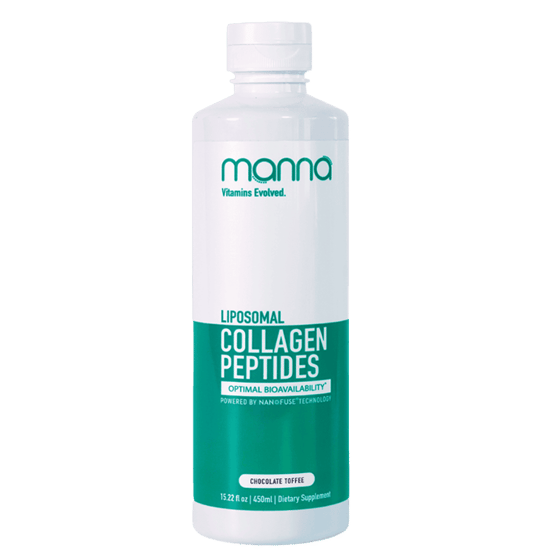
Collagen peptides are already hydrolyzed (pre-broken into small fragments) to make them easier to absorb. Delivery format still affects how pleasant and consistent supplementation is day to day — a liquid you enjoy taking beats a powder that clumps in the back of your cupboard. Manna's Liposomal Collagen Peptides pair hydrolyzed peptides with liposomal delivery in an easy liquid format. To understand why delivery matters for nutrients in general, see our primer on bioavailability.
The bottom line
For most people, 2.5–10 g of collagen peptides per day is a sensible starting point for skin, hair, and nails, moving toward 10 g if joints are your focus. Take it consistently, be patient for 8–12 weeks, and choose a format you will actually stick with.
References
- 01NIH Office of Dietary Supplements — Dietary Supplements for Exercise and Athletic Performance — Overview of protein/collagen intake context.
- 02Journal of Drugs in Dermatology (2019) — Oral collagen supplementation and skin — Randomized trials on skin elasticity and hydration with collagen peptides.
- 03Applied Physiology, Nutrition, and Metabolism — Collagen peptides and connective tissue — Dosing used in joint/tendon studies (~10–15 g/day).
- 04Educational only; not medical advice. Consult your healthcare provider before starting a new supplement.
This article is for educational purposes only and is not medical advice. These statements have not been evaluated by the Food and Drug Administration. Manna products are not intended to diagnose, treat, cure, or prevent any disease. Consult your healthcare provider before starting any new supplement, especially if you are pregnant, nursing, taking medication, or managing a medical condition.
Frequently asked questions
Wellness that actually works
Liposomal Collagen Peptides
Premium, maximum-absorption collagen for beauty and joints.
Explore Manna's clinically-informed liposomal supplements.
Keep reading



Feel the difference absorption makes.
Start today, backed by our 90-day money-back guarantee. Free U.S. shipping on every subscription.