
Wellness
Anti-Inflammatory Supplements: What the Evidence Actually Supports
The Manna Editorial Team · August 10, 2026
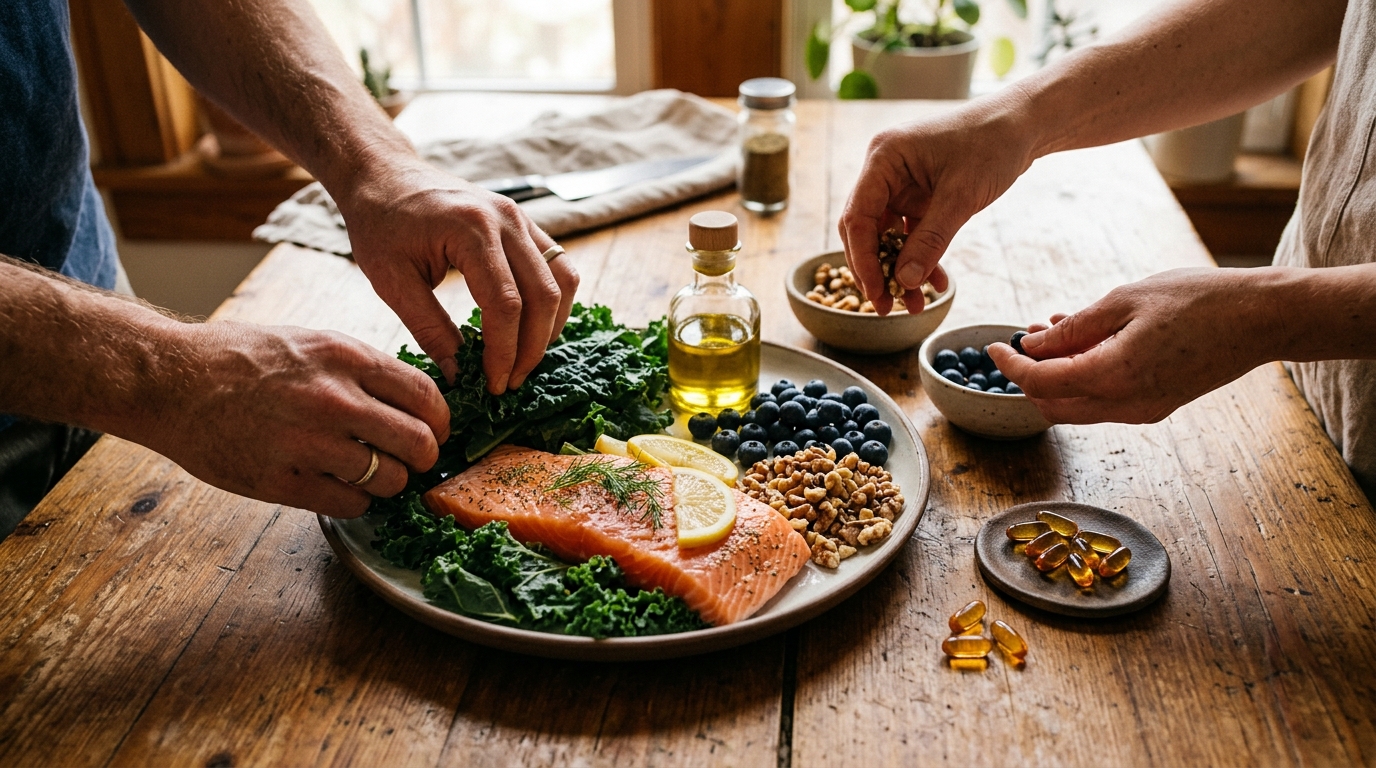
Evidence-based. This article was written and fact-checked by the Manna Editorial Team against the peer-reviewed research cited throughout.
Quick answer: Curcumin and omega-3 fatty acids have the strongest research support for helping maintain a healthy inflammatory response, but absorption is the deciding variable—standard turmeric powder is poorly absorbed, making delivery form (liposomal, phytosome, or paired with piperine) more important than dose.
How to Read 'Anti-Inflammatory' Supplement Claims Honestly
You've seen the articles promising that certain supplements "fight inflammation" or "reduce inflammatory markers." Perhaps your doctor mentioned chronic low-grade inflammation during your last physical, or a podcast cited C-reactive protein levels in relation to long-term health. The supplement aisle and online ads promise solutions. Here's what's actually going on.
No supplement for inflammation—regardless of the ingredient—is approved to diagnose, treat, cure, or prevent any disease. What the research does examine is whether certain nutrients support the body's natural inflammatory response, the complex biological process that can become imbalanced over time. The distinction matters. A supplement may help maintain healthy inflammatory pathways without being a pharmaceutical intervention for inflammatory disease.
When evaluating anti inflammatory supplements, you're weighing three variables: the strength of evidence for the ingredient itself, the bioavailability of that ingredient in a given form, and whether the research applies to your situation. Most marketing collapses these into a single claim. We're going to separate them.
This guide ranks ingredients and nutrients by the quality of evidence behind them, not brands. We'll note where our own product fits—liposomal curcumin—but the goal is to give you the framework to evaluate any option, including those we don't make.
The Best-Evidenced Anti-Inflammatory Supplements: Ranked by Research Quality
The following ingredients have been studied in human trials for their role in supporting a balanced inflammatory response. Not all evidence is created equal—we'll distinguish between well-replicated findings and preliminary signals.
Curcumin (from turmeric)
Curcumin—the active polyphenol in turmeric root—is the single most-studied botanical compound in relation to inflammation. Reviews examining its role in various contexts consistently find that it supports the body's regulation of inflammatory signaling molecules.[1] Meta-analyses have examined curcumin supplementation in relation to joint comfort and mobility, finding measurable support for healthy joint function.[3]
Strength of evidence: Strong. Multiple systematic reviews and meta-analyses in humans.
The catch: Standard curcumin powder is notoriously poorly absorbed—your gut absorbs less than 1% of an unformulated dose. Absorption-enhanced forms (phytosomes, liposomal encapsulation, or co-administration with piperine from black pepper) change the equation entirely. We'll detail this below, because it's the deciding factor.
Omega-3 Fatty Acids (EPA and DHA)
EPA and DHA—the long-chain omega-3s found in fish oil and algae—are precursors to specialized pro-resolving mediators, compounds the body uses to help resolve the inflammatory response after it's served its purpose. Supplementation has been examined extensively in athletic recovery, joint health, and cardiovascular contexts.[2][4]
Strength of evidence: Strong. Decades of research, including large cohort studies and controlled trials.
Considerations: Dose matters—most benefits are observed at 1–3 grams of combined EPA+DHA per day, higher than the amount in a standard multivitamin. Quality varies; look for third-party testing for oxidation (TOTOX value) and contaminants.
Ginger Extract
Ginger root contains gingerols and shogaols, compounds studied for their role in supporting comfort and mobility. Research has examined ginger in the context of exercise recovery and joint health, with several trials showing it may support the body's natural regulation of inflammatory pathways.[3]
Strength of evidence: Moderate. Fewer large-scale trials than curcumin or omega-3s, but consistent signals in smaller studies.
Quercetin
Quercetin is a flavonoid found in onions, apples, and berries. It's been studied for its antioxidant properties and potential role in modulating immune signaling. Recent reviews in sports nutrition and recovery contexts suggest it may support a balanced inflammatory response, particularly when combined with other polyphenols.[4]
Strength of evidence: Emerging. Mechanistic data is compelling; human trial evidence is growing but still limited compared to curcumin and omega-3s.
Boswellia (Frankincense Extract)
Boswellia serrata resin contains boswellic acids, which have been studied for their role in supporting joint comfort and function. Some controlled trials have found benefits for mobility and flexibility.[3]
Strength of evidence: Moderate. Promising trial data, though fewer large-scale replications than top-tier options.
What the Evidence Does Not Strongly Support
Many supplements are marketed for inflammation with thin or preliminary evidence: high-dose vitamin D (unless you're deficient), bromelain (an enzyme from pineapple), and various proprietary herbal blends. That doesn't mean they're ineffective—it means the research base is not yet robust enough to rank them alongside curcumin or omega-3s. Approach them with appropriately tempered expectations.
| Ingredient | What the Evidence Supports | Strength of Evidence | Notes |
|---|---|---|---|
| Curcumin | Supports healthy inflammatory response, joint comfort and mobility | Strong | Absorption is make-or-break; unformulated curcumin is poorly bioavailable |
| Omega-3 (EPA/DHA) | Supports resolution of inflammatory response, cardiovascular and joint health | Strong | Effective doses typically 1–3 g/day combined EPA+DHA |
| Ginger Extract | Supports comfort, mobility, and balanced inflammatory pathways | Moderate | Fewer large trials than curcumin; consistent smaller studies |
| Quercetin | Antioxidant support; may modulate immune signaling | Emerging | Growing evidence base, particularly in athletic contexts |
| Boswellia | Supports joint comfort and flexibility | Moderate | Standardized extracts (with defined boswellic acid content) preferred |
Why Curcumin Absorption Is Make-or-Break
Curcumin's poor natural bioavailability is one of the most-documented problems in supplement science. When you ingest standard turmeric powder or a non-enhanced curcumin capsule, your digestive system absorbs less than 1% of it—the rest is metabolized in the gut or liver before it reaches circulation. A 500 mg capsule might deliver only a few milligrams to your bloodstream.
Three strategies have been developed to solve this, and the differences in absorption are dramatic:
Raw Turmeric or Standard Curcumin Powder
This is what you get in most bulk turmeric capsules or the spice aisle. Bioavailability is extremely low. The curcumin is fat-soluble, so taking it with a fatty meal helps marginally, but you're still absorbing very little. High doses (several grams per day) are often used in research to compensate, but even then, blood levels remain low.
Curcumin with Piperine (Black Pepper Extract)
Piperine inhibits certain liver enzymes that break down curcumin, allowing more to remain in circulation. Studies show this combination can increase bioavailability by approximately 2,000% compared to curcumin alone—a significant improvement. The downside: piperine can also affect the metabolism of medications, and some people experience digestive discomfort at the doses required.
Phospholipid-Based Delivery (Phytosomes and Liposomes)
Phytosomes bind curcumin to phosphatidylcholine, creating a complex that crosses gut membranes more efficiently. Liposomal formulations encapsulate curcumin inside phospholipid spheres that fuse with intestinal cell membranes, delivering the compound directly into cells. Both approaches achieve absorption rates many times higher than standard powder—often comparable to or exceeding the piperine strategy, without relying on enzyme inhibition.
The practical takeaway: a 250 mg dose of highly bioavailable curcumin (liposomal or phytosome) can deliver more circulating curcumin than 2,000 mg of standard powder. Absorption isn't a footnote—it's the entire story.
If you're comparing options, the question isn't just "how many milligrams?" but "which form, and what does the bioavailability data show?" For more detail on delivery forms, see our guide to choosing a turmeric supplement.
Combining Diet and Supplements for a Healthy Inflammatory Response
Supplements are not a substitute for foundational nutrition. The body's inflammatory response is influenced by overall dietary patterns—whole foods rich in polyphenols, fiber, and omega-3s support balanced inflammation in ways that isolated nutrients cannot fully replicate.
An anti-inflammatory dietary approach typically emphasizes:
- Colorful vegetables and fruits—particularly berries, leafy greens, and cruciferous vegetables—which provide diverse polyphenols and fiber that support gut health and immune balance.
- Fatty fish or algae sources of omega-3s—salmon, sardines, mackerel—or plant-based ALA from flax and walnuts (though ALA converts poorly to EPA/DHA, making supplementation or direct sources important).
- Nuts, seeds, and extra-virgin olive oil—sources of healthy fats and additional polyphenols.
- Minimized ultra-processed foods and added sugars—highly refined carbohydrates and trans fats are associated with systemic inflammatory imbalance.
Supplements like curcumin or omega-3s are best understood as additions to this foundation, not replacements. If your baseline diet is pro-inflammatory, no supplement will fully compensate. Conversely, if you're already eating well, targeted supplementation may offer additional support where dietary intake is limited—such as achieving therapeutic doses of curcumin or EPA/DHA that are difficult to obtain from food alone.
For a deeper primer, see our 101 guide to nutrients that support a healthy inflammatory response and our overview of inflammation science.
Safety, Interactions, and When to See a Professional
The best anti inflammatory supplements are generally well-tolerated at typical doses, but no supplement is universally safe for everyone. Here's what to know:
Curcumin
Generally recognized as safe. High doses (several grams per day) may cause mild digestive upset in some individuals. Curcumin can have blood-thinning properties—if you take anticoagulant or antiplatelet medications (warfarin, aspirin, clopidogrel), consult your physician before starting. It may also interact with medications metabolized by certain liver enzymes, particularly if formulated with piperine.
Omega-3 Fatty Acids
Safe for most people. At very high doses (above 3–4 grams per day), omega-3s may increase bleeding risk, especially in combination with blood thinners. Choose products tested for mercury, PCBs, and oxidation. Fish oil can cause mild gastrointestinal symptoms (fishy aftertaste, loose stools) in some users; enteric-coated or algae-based options may reduce this.
Ginger and Boswellia
Generally safe. Ginger may interact with anticoagulants. Boswellia is usually well-tolerated but can occasionally cause digestive upset.
Quercetin
Safe at typical supplemental doses (500–1,000 mg/day). Very high doses have not been extensively studied for long-term safety.
When to Consult a Healthcare Professional
Supplements support wellness; they do not replace medical diagnosis or treatment. You should speak with a physician if:
- You have been diagnosed with an inflammatory condition (rheumatoid arthritis, inflammatory bowel disease, lupus, etc.) and are considering supplements alongside or instead of prescribed treatment.
- You are taking prescription medications, particularly anticoagulants, immunosuppressants, or medications with narrow therapeutic windows.
- You experience persistent pain, swelling, or other symptoms that may indicate an underlying condition requiring medical evaluation.
- You are pregnant, breastfeeding, or planning surgery (some anti-inflammatory supplements should be discontinued before surgical procedures due to bleeding risk).
A healthcare provider can help you assess whether supplementation is appropriate for your individual situation and monitor for interactions or contraindications.
Where Manna's Liposomal Curcumin Fits
We make one product in the anti-inflammatory supplement category: liposomal curcumin. It's worth explaining why we chose this form and how it relates to the evidence discussed above.
Curcumin is the ingredient with the strongest research base for supporting a healthy inflammatory response. But as we've detailed, absorption is the limiting factor. We use liposomal encapsulation—phospholipid spheres that protect curcumin through digestion and deliver it directly into intestinal cells—because the bioavailability data for this method is compelling. Our formulation delivers curcumin at levels comparable to much higher doses of standard powder, without relying on piperine or enzyme inhibition.
We're transparent about what this product is and isn't. It supports the body's natural inflammatory pathways. It does not treat, cure, or prevent any disease. It is our answer to the absorption problem that makes most turmeric supplements underperform their potential. If you've tried standard curcumin capsules without noticeable benefit, the issue was likely bioavailability, not the ingredient itself.
You'll find detailed information about our sourcing, third-party testing, and formulation on the product page. If liposomal delivery doesn't fit your needs or budget, a high-quality phytosome or piperine-enhanced curcumin product is a reasonable alternative—just understand the trade-offs in absorption and interaction risk.
Frequently Asked Questions
What is the best supplement for inflammation?
Based on the breadth and quality of research, curcumin and omega-3 fatty acids (EPA and DHA) have the strongest evidence for supporting a healthy inflammatory response. For curcumin, absorption-enhanced forms (liposomal, phytosome, or with piperine) are essential. Omega-3s require doses of 1–3 grams per day of combined EPA+DHA to achieve the levels studied in research.
Can I take curcumin and omega-3 together?
Yes. There is no known negative interaction between curcumin and omega-3 supplements, and some people choose to take both to address different aspects of inflammatory balance. Both have mild blood-thinning properties at high doses, so if you take anticoagulant medications, discuss combined use with your healthcare provider.
How long does it take for anti-inflammatory supplements to work?
This depends on the ingredient, dose, and individual factors. Some people report subjective improvements in comfort or recovery within a few days to two weeks, particularly with high-bioavailability curcumin or omega-3s. Measurable changes in inflammatory markers—if tested—may take four to twelve weeks of consistent supplementation. Supplements for inflammation are not fast-acting pharmaceuticals; they support gradual rebalancing.
Are anti-inflammatory supplements safe for long-term use?
Curcumin and omega-3s have been studied in long-term human trials (months to years) without significant safety concerns at typical supplemental doses. As with any supplement, quality matters—choose products that are third-party tested for purity and potency. Long-term use should be discussed with a healthcare provider, especially if you have underlying health conditions or take medications.
Do I need to take anti-inflammatory supplements with food?
Curcumin is fat-soluble, so taking it with a meal that contains some fat may improve absorption, even in enhanced forms. Omega-3s are also best absorbed with food and may cause less gastrointestinal discomfort that way. Liposomal formulations are designed to be less dependent on food for absorption, but taking them with meals is still a reasonable default. Check the label of your specific product for manufacturer guidance.
Can diet alone manage inflammation without supplements?
A well-constructed anti-inflammatory diet—rich in whole foods, omega-3s, polyphenols, and fiber—is the foundation of inflammatory balance and may be sufficient for many people. Supplements become relevant when dietary intake of specific compounds (like curcumin or high-dose EPA/DHA) is difficult to achieve through food alone, or when someone is looking for additional support beyond what diet provides. They are not mandatory, but they can be helpful adjuncts in the right context.
These statements have not been evaluated by the Food and Drug Administration. This product is not intended to diagnose, treat, cure, or prevent any disease.
Sources
- Jiao H et al. Diet and Systemic Lupus Erythematosus (SLE): From Supplementation to Intervention. International journal of environmental research and public health (2022).
- Rawson ES et al. Dietary Supplements for Health, Adaptation, and Recovery in Athletes. International journal of sport nutrition and exercise metabolism (2018).
- Mathieu S et al. A Meta-Analysis of the Impact of Nutritional Supplementation on Osteoarthritis Symptoms. Nutrients (2022).
- Rowland A et al. A comprehensive review of the physiology and evidence base to guide the use of ergogenic and medical supplements for enhanced cycling performance. Journal of the International Society of Sports Nutrition (2026).
- Lucke-Wold B et al. Supplement and nutraceutical therapy in traumatic brain injury. Nutritional neuroscience (2025).
- McMasters M et al. Addressing Meta-Inflammation in the Comprehensive Management of Chronic Pain. Cureus (2025).
This article is for educational purposes only and is not medical advice. These statements have not been evaluated by the Food and Drug Administration. Manna products are not intended to diagnose, treat, cure, or prevent any disease. Consult your healthcare provider before starting any new supplement, especially if you are pregnant, nursing, taking medication, or managing a medical condition.
Frequently asked questions
- What is the most effective anti-inflammatory supplement?
- Curcumin and omega-3 fatty acids have the strongest research support for helping maintain a healthy inflammatory response, but effectiveness depends heavily on absorption—delivery form (liposomal, phytosome, or paired with piperine) often matters more than dose alone.
- What can I take daily to help with inflammation?
- Curcumin and omega-3s are commonly taken daily to support a healthy inflammatory response, but you should consult a healthcare professional to determine what's appropriate for your individual health needs.
- Is curcumin or turmeric better for inflammation?
- Curcumin is the active compound in turmeric responsible for supporting a healthy inflammatory response; standard turmeric powder is poorly absorbed, so curcumin extracts formulated for bioavailability (liposomal, phytosome, or with piperine) are generally more effective than turmeric powder alone.
- How long do anti-inflammatory supplements take to work?
- The timeframe varies by ingredient, dose, and individual factors—some people notice changes within a few weeks, while others may require consistent use over several months to observe support for healthy inflammatory pathways. Consult your healthcare provider for guidance specific to your situation.
- Are anti-inflammatory supplements safe to take every day?
- Many anti-inflammatory supplements like curcumin and omega-3s are generally recognized as safe for daily use, but individual tolerability and interactions with medications vary—always consult a healthcare professional before starting any daily supplement regimen.
Keep reading
The Best Collagen Powder: A Buyer's Guide
Shopping for collagen powder? Here's how to judge peptide quality, sourcing, mixability, and value — and when a liquid might serve you better.
Liquid Collagen vs. Powder: Which Absorbs Better?
Liquid collagen and collagen powder both deliver peptides — but format, convenience, and absorption differ. Here's how to choose.

Magnesium for Sleep: Does It Help, and Which Form Is Best?
Magnesium is a popular sleep aid. Here's what the research says, which forms work best, and how to take it for restful sleep.
Wellness that actually works
Explore Manna's clinically-informed liposomal supplements.
Shop all products